Wait time for new book arrivals may increase. Learn more

10 of 1133 results
Thumbnail
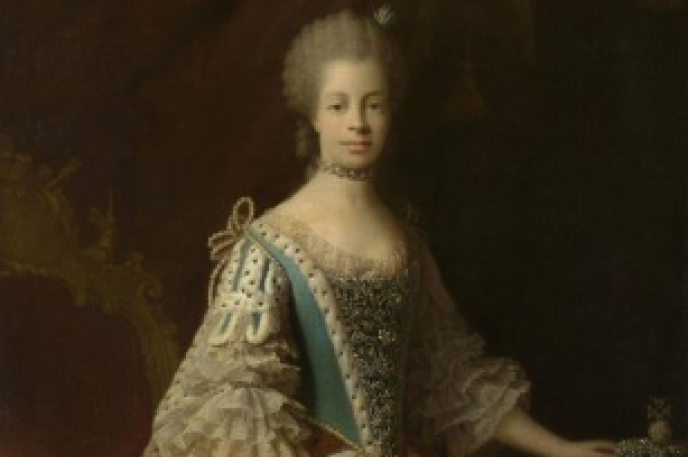
A portrait of Queen Charlotte of Mecklenburg. Find a hand-written letter from the Queen at the Charlotte Mecklenburg Library.

Why is Charlotte called the Queen City?

September 4, 2019

Charlotte, North Carolina, was first settled after colonists made their way down the Great Wagon Road. Northern colonies in Pennsylvania, Maryland and Virginia had become crowded, so settlers went south to seek religious and economic freedom, as well as to take advantage of quality farmland. Native Americans used this trail for hunting, trading, and war long before the settlers used it to migrate south. The Native Americans named the trail “Warriors Path.” 


Conestoga Wagon, courtesy of Wikimedia. 

Before Charlotte was chartered in 1768 by the colonial North Carolina General Assembly, settlers called the area “Charlottetowne” after Queen Charlotte Sophia of Mecklenburg-Strelitz. The settlers sought to honor Queen Charlotte’s husband, King George III, as well as to sway Assemblymen into making Charlotte the site of the county courthouse as a political bid. Courthouses enabled cities to grow economically by serving as a hub for visitors and business during quarterly sessions. The Assemblymen chartered the city of Charlotte in 1768 and entitled the city to a courthouse and a prison.  

The charter reads: 

“Be it therefore Enacted, by the Governor, Council, and Assembly, and by the Authority of the same, That the said Three Hundred and Sixty Acres of Land, so laid off by the Commissioners or Trustees as aforesaid, be, and the same is hereby constituted, erected, and established, a Town and Town Common, and shall be called by the name of Charlotte.” 

-- Acts of the North Carolina General Assembly, 1768; North Carolina. General Assembly; November 07, 1768 - December 05, 1768; Volume 23, Pages 759-783; CHAPTER XI. 


1766- The First Mecklenburg County Courthouse (modern interpretation). Courtesy of the Robinson-Spangler Carolina Room. 

Mecklenburg County, the county in which the city of Charlotte exists, was also named in honor of Queen Charlotte. Charlotte’s birthplace was Mecklenburg-Strelitz, which is a province in present-day northern Germany. Queen Charlotte never actually visited our city, but one of her handwritten letters is housed at the Robinson-Spangler Carolina Room in the Main Library: 


Queen Charlotte Letter, 1812. Courtesy of Charlotte Mecklenburg Library, Robinson-Spangler Carolina Room. 


Who was Queen Charlotte anyway?   


George III (1738-1820), Queen Charlotte (1744-1818) and their Six Eldest Children. Courtesy of Zoffany Royal Collection Trust/© Her Majesty Queen Elizabeth II, 2014. 

Queen Charlotte Sophia was born in Mecklenburg-Strelitz (in the Holy Roman Empire) in 1744, to Duke Charles Louis Frederick of Mecklenburg and Princess Elisabeth Albertine of Saxe-Hildburghausen. As a child, she was educated by a priest in botany, natural history and language, but focused her studies in housekeeping and religion. As demonstrated by the letter above, Charlotte learned how to read and write. These were rare skills for women during that time—her royal status permitted her to have access to education through multiple tutors.  


Unfinished portrait depicting the marriage of George III to Charlotte of Mecklenburg-Strelitz on 8 September 1761, Sir Joshua Reynolds. Courtesy of Royal Collection Trust. 

At 17 years old in 1761, Charlotte was engaged to King George III. She was an attractive option to wed because she was born in an “insignificant” part of Europe and would likely have no interest in politics; she was instructed by George III after their wedding “not to meddle” in politics, which she obeyed. However, she did have indirect political influence—she used her closeness to George III to keep herself informed and to recommend office appointments, as well as keep German interests in mind. She did not speak English at first but learned quickly. One observer commented, "She is timid at first but talks a lot, when she is among people she knows."  


View of Buckingham House from WH Pyne, The History of the Royal Residences, 1819 (Courtesy of the British Library).

Although St. James Palace was the official Royal residence, Queen Charlotte fell in love with Buckingham House, which she and George III moved into shortly after purchasing. She gave birth to 14 of her 15 children in the house that eventually became known as “The Queen’s House.” This property is now popularly known as Buckingham Palace. 


Wolfgang Amadeus Mozart Opus 3 Dedication Page. Courtesy of Bibliorare. 

Queen Charlotte had a passion for music, so she brought a harpsichord with her from Germany and took lessons from Johann Christian Bach, son of Johann Sebastian Bach. Wolfgang Amadeus Mozart once played the organ as Queen Charlotte sang on a family trip to England when he was 8 years old. Mozart later dedicated his Opus 3 to his beloved queen. On the dedication page he wrote, “Filled with pride and joy at daring to offer you a tribute, I was finishing up these sonatas to be laid at the feet of your Majesty [Queen Charlotte]; I was, I confess, drunk with vanity and thrilled with myself, when I spied the Genius of Music at my side.”  


Queen Charlotte (1744-1818) by Sir Allan Ramsay, ca. 1761-1769. Courtesy of Royal Collection Trust, https://www.rct.uk/collection/402413/queen-charlotte-1744-1818 

According to some genealogists, Queen Charlotte is informally considered the second biracial Queen of England. She was purportedly a direct descendent of Margarita de Castro e Sousa, a member of the African branch of the Portuguese Royal House. Early portraits of the Queen show that Charlotte had hints of African physical attributes. Sir Allan Ramsay painted many portraits of Queen Charlotte, seen above. Writings from the period also alluded to her “mulatto” appearance, meaning “one with mixed black and white ancestry.”  

As anti-slavery movements in England became more prevalent, royal portrait painters were instructed to soften “undesirable” features in their subjects’ faces. This included making Queen Charlotte’s skin tone appear lighter and manipulating other physical features. In fact, Ramsay’s Coronation portrait of Charlotte was distributed in England and the colonies to subtly stoke anti-slavery sentiment due to the prevalence of Charlotte’s African features.  


A photo of Kew Gardens, the royal botanical garden Queen Charlotte helped maintain. Photo by Kew Gardens. 

Queen Charlotte had a keen interest in botany and played a large role in expanding and preserving Kew Gardens, the Royal botanical gardens in Kew, England. She was known by the British public as the “Queen of Botany,” and botanists named the Bird of Paradise, a flower native to South Africa, the Strelitzia reginae in her honor. Charlotte turned to botany when she struggled with her mental health, which is when she planned the gardens of the Frogmore House in Windsor.  

Queen Charlotte was also a philanthropist, founding several orphanages in England. She founded and was named the Patron of the General Lying-in Hospital in London, which was later named The Queen’s Hospital and is now known as The Queen Charlotte’s and Chelsea Hospital. Queen Charlotte was also known to offer aid to poor families, as well as helped struggling musicians. 

--

Sources:  

Blakemore, Erin. “Meghan Markle Might Not Be the First Mixed-Race British Royal.” History. https://www.history.com/news/biracial-royalty-meghan-markle-queen-charlotte. Accessed August 2019. 

Cooper, Jean L. and Angelika S. Powell. “Queen Charlotte’s Letters.” http://people.virginia.edu/~jlc5f/charlotte/letter_intro.html. Accessed August 2019.  

“England’s 18th Century Black Queen, Sophie Charlotte born.” AAREG. https://aaregistry.org/story/englands-first-black-queen-sophie-charlotte-born/. Accessed August 2019. 

Fraser, Flora. “Princesses: The Six Daughters of George III.” New York: Knopf, 2005. (CML Call No. 941.073 Fraser) 

Hanchett, Tom. “The History of Charlotte.” Charlotte. https://www.charlottesgotalot.com/articles/history/the-history-of-charlotte. Accessed August 2019. 

Hedley, Olwen. “Queen Charlotte.” London: J. Murray, 1875. (NCR B C479c H455) 

“History Timeline, Rural Beginnings 1730-1772, 1776- The First Mecklenburg County Courthouse.” Charlotte Mecklenburg Story. https://www.cmstory.org/exhibits/history-timeline-rural-beginnings-1730-1772/1766-first-mecklenburg-county-courthouse. Accessed August 2019. 

“History Timeline, Rural Beginnings 1730-1772, 1768- Charlotte Chartered.” Charlotte Mecklenburg Story. https://www.cmstory.org/exhibits/history-timeline-rural-beginnings-1730-1772/1768-charlotte-chartered. Accessed August 2019.  

Jackson, Marshall R., III. “Great Wagon Road.” NCPedia.  https://www.ncpedia.org/great-wagon-road. Accessed August 2019.  

“Queen Charlotte (19 May 1744- 17 November 1818.” The Royal Family. https://www.royal.uk/. Accessed August 2019. 

Valdes y Cocom, Mario de. “The Blurred Racial Lines of Famous Families: Queen Charlotte.” South Carolina etv. https://www.pbs.org/wgbh/pages/frontline/shows/secret/famous/royalfamily.html.  

Walk-Morris, Tatiana. “Five Things to Know About Queen Charlotte.” Smithsonian Magazine. https://www.smithsonianmag.com/smartnews-arts-culture/5-things-you-didnt-know-about-queen-charlotte-180967373/. Accessed August 2019. 
Thumbnail
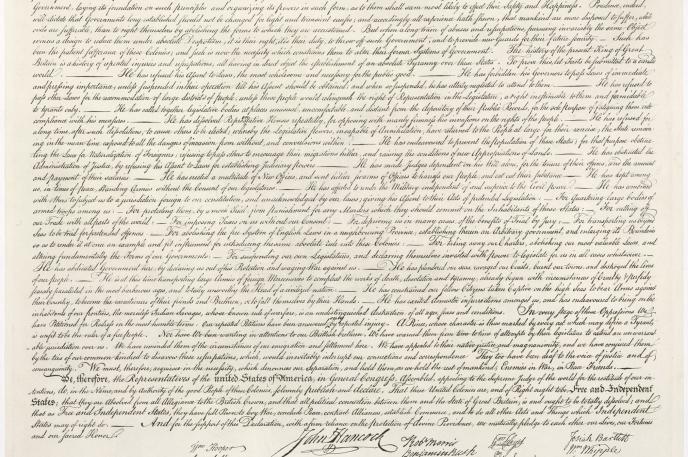
The Declaration of Independence

How July 2 almost became Independence Day

July 2, 2019

Yes, you read that right!  

The legal separation of the Thirteen Colonies from Great Britain in 1776 actually occurred on July 2, when the Second Continental Congress voted to approve a resolution of independence proposed by Richard Henry Lee of Virginia. Lee made three main points, to include a declaration of independence, a call to form foreign alliances and a “plan for confederation”: 


Lee’s Resolution, June 7, 1776 (National Archives and Records Administration: 301685 )

After approving Lee’s Resolution, Congress turned its attention to The Committee of Five’s drafted statement of independence. The Committee met and wrote what became the Declaration of Independence between June 11-28. Thomas Jefferson, John Adams, Roger Sherman, Robert Livingston, and Benjamin Franklin all served on the Committee, with Thomas Jefferson leading as the principle author.  On July 2 the document was approved, and by July 4, 1776 Congress agreed on the final wording, thus leading to the official adoption of the Declaration of Independence. 


The Committee of Five (National Archives and Records Administration: 532924 )

So, should we celebrate July 2 as our actual day of independence? It seems that John Adams thought so. He wrote to his wife Abigail: 

“The second day of July 1776 will be the most memorable epoch in the history of America. I am apt to believe that it will be celebrated by succeeding generations as the great anniversary festival. It ought to be commemorated as the day of deliverance, by solemn acts of devotion to God Almighty. It ought to be solemnized with pomp and parade, with shows, games, sports, guns, bells, bonfires, and illuminations, from one end of this continent to the other, from this time forward forever more.” 

Portrait of John Adams (National Archives and Records Administration: 50780435)

Adams's prediction of how Americans would celebrate this occasion was accurate, despite being off by two days. From the outset, Americans celebrated independence on July 4, the date shown on the much-publicized Declaration of Independence, rather than on July 2, the date the resolution of independence was approved in a closed session of Congress.  

The signers of the Declaration of Independence were not all present on July 4, 1776, although Thomas Jefferson, John Adams, and Benjamin Franklin did write that they signed it the same day the document was approved and adopted. Other members of Congress, led by John Hancock, the President of the Congress, signed the Declaration nearly a month later on August 2. 

The King of England viewed the members of the Second Continental Congress as traitors, rebelling against the crown. None of the signers were sentenced to death in response to their rebellious actions, but most were punished indirectly through the burning of their homes, imprisonment, or physical harm. 

Oddly, both John Adams and Thomas Jefferson, the only signers of the Declaration of Independence later to serve as Presidents of the United States, died on the same day: July 4, 1826, which was the 50th anniversary of the Declaration. 

  ----

Sources:  

Massachusetts Historical Society. Letter from John Adams to Abigail Adams, 3 July 1776. Accessed July 2019. https://www.masshist.org/digitaladams/archive/popup?id=L17760703jasecond&page=L17760703jasecond_2   

National Archives and Records Administration. Declaration of Independence. Docs Teach. Accessed July 2019. https://www.docsteach.org/documents/document/the-declaration-of-independence 

National Archives and Records Administration. Lee’s Resolution. Docs Teach. Accessed July 2019. https://www.docsteach.org/documents/document/lee-resolution-independence  

Thumbnail
Babies, toddlers and preschoolers participate in Summer Break at Charlotte Mecklenburg Library

Babies, toddlers and preschoolers participate in Summer Break

July 3, 2019

Did you know that babies, toddlers and preschoolers can join in on Summer Break too? Reading time includes time spent being read to and time spent reading to someone else. This means that parents can log reading time for everyone whether they read to or with their child! 

This summer discover the learning moments all around us. The library is here to help you get your child ready to read with simple activities every day.  

When you register your child ages 0-3 years for Summer Break, we'll give you a colorful pamphlet with ideas for learning activities and lots of great literacy tips. Some of our ideas include:  

  • Draw a picture and make up a story about it. 

  • Read a book together. Create voices for the characters and use your body to tell the story.  

  • Take your child to storytime. 

  • Talk about the beginning, middle and end of the story while reading a book.  

Learn About the Benefits of Active Reading 

Active Reading is a great way to engage with your child while you read together. The ABCs of Active Reading are:  

  • A: Ask Questions. Open ended questions get kids talking. “What do you think will happen next in the story?” 
  • B: Build Vocabulary. Demonstrating new words builds vocabulary. Don’t just read the word “whisper” – actually whisper.  
  • C: Connect to Child’s World. Relating the story to what kids know helps them learn more about the world.  

The Summer Break program is wonderful for all ages! We have activities, book suggestions and programs for babies, children, teens and adults.  Celebrate Library Week at Carowinds! 


In addition to offering free Carowinds tickets to eligible Summer Break participants, Carowinds also offers Library customers the opportunity to purchase discounted tickets and use them during Carowinds Library Week. This year Carowinds Library Week runs July 22-28, and the discounted ticket price is $39 per person, which includes parking. Purchase discounted tickets to be used during Library Week and help us celebrate Summer Break at Carowinds! 

Click here to access the portal 

User name: CM  

Password: LIBRARY   

These are case sensitive.  

Additional discounts may also be available through this portal throughout the summer. 

REMINDER: all libraries are closed for July 4. 

Comments? Questions? 

Are you having problems with the Summer Break website or your account? Do you have questions about the program? Feel free to stop by your local library for assistance, call 704-416-0101 or email [email protected]

Thumbnail
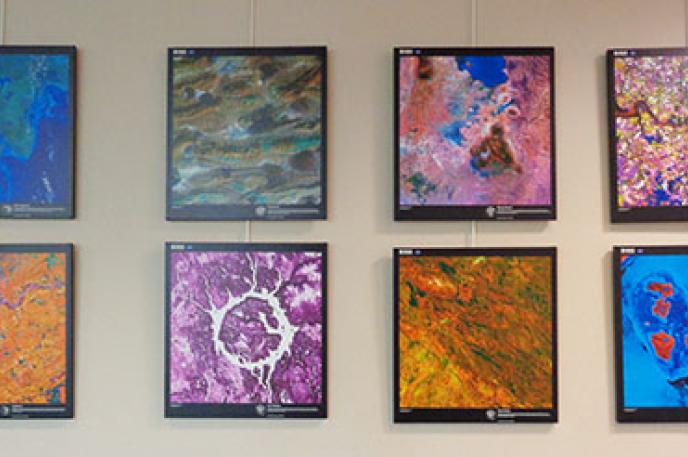
colorized infrared satellite pictures of the Earth

The latest exhibit at Main Library is out of this world

July 9, 2019

The latest exhibit at Main Library is out of this world.  Truly.  

Earth as Art 4: A Fusion of Science and Art features colorized, infrared Landsat satellite images of Earth from creative vantage points. All the images were acquired by Landsat 8, the satellite launched by NASA in 2013, and the exhibition is on loan to the Library from NASA and the U.S. Geological Survey (USGS). The 38-image collection will be displayed on the first and second floors at Main Library through August 31, 2019.

NASA and the USGS have been taking photos from space since the 1970s, and this ongoing record allows scientists to monitor changes over time. But they’re also stunning – by combining different wavelengths of light, some invisible to the human eye, ordinary views of clouds, mountains or rivers are transformed into museum-quality works of art.

And that’s how Earth as Art was born. In the late 1990s staff tasked with image calibration began a collection of their favorites. “Every once in a while, we’d see an image that was so amazing, so remarkable, that we started squirreling them away,” said Earth Resources Observation and Science engineer Jon Christopherson. “We wrote them to CDs back then, and it wasn’t long before we had a drawer full of spectacular images.”

The exhibit began touring worldwide in 2002 and the Library is thrilled to host it at the Main branch in Uptown for the summer. “This exhibit came about through an unexpected combination of the scientific search for geographic changes on earth, some people in an office who happened to recognize something extraordinary, the artistic application of enhancing colors and the desire to freely share knowledge about our world,” said Mimi Curlee, Librarian at Main Library. “It is truly amazing!”

Explore these masterpieces for yourself!

More information about Earth as Art 4 can be found at https://landsat.gsfc.nasa.gov/earth-as-art-4-a-fusion-of-science-and-art/.

The images are online and in the public domain, so people can download and use as they like.

https://www.usgs.gov/centers/eros/science/earth-art-4?qt-science_center_objects=7#qt-science_center_objects

The Library also has print and online resources available for checkout that contain similar images:

Earth as Art by Lawrence Friedl

Earth as Art eBook

Earth by Michael J. Carlowicz


Thumbnail
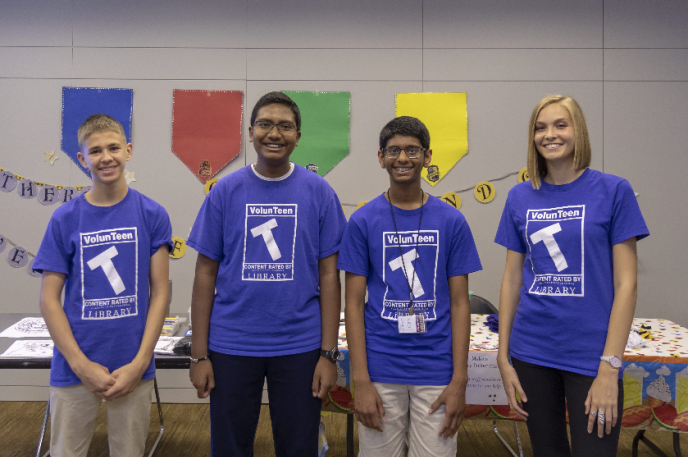
VolunTeens from the Charlotte Mecklenburg Library gain skills imperative to their future.

Thank you to our Summer VolunTeens!

July 9, 2019

Each summer, the Library is excited to welcome community teens into our branches to participate in our Summer VolunTeen program. The VolunTeen program is designed to expose young people to a wealth of vital experiences and help teens gain service hours during the summer. VolunTeens build workforce development and leadership skills while volunteering at the Library.

We’d like to take a moment to tell our 2019 VolunTeens, “Thank you and great job!”

Our VolunTeen initiative is now year-round, which means that teens ages 13 to 17 can now earn community service hours by becoming a VolunTeen up to three times a year! Charlotte Mecklenburg Library is looking for responsible teens who enjoy working with the public, helping others and giving back to their community.
Applications are only accepted three times a year. In January for the Spring term, in April for the Summer term and in August for the Fall term. During application months, please apply on the Volunteer page. Click on “Become a Volunteer” and search for Teen Volunteer 2019 opportunities. Applications will be accepted throughout the month as designated or until a branch has reached capacity.

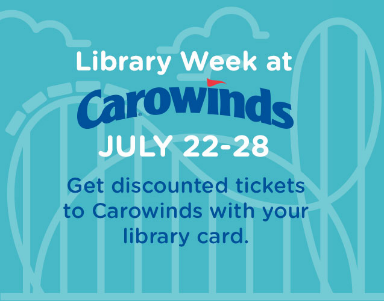
Celebrate Library Week at Carowinds!

In addition to offering free Carowinds tickets to eligible Summer Break participants, Carowinds also offers Library customers the opportunity to purchase discounted tickets and use them during Carowinds Library Week. This year Carowinds Library Week runs July 22-28, and the discounted ticket price is $39 per person, which includes parking. Purchase discounted tickets to be used during Library Week and help us celebrate Summer Break at Carowinds!

Click here to access the portal

User name: CM

Password: LIBRARY 

These are case sensitive.

Additional discounts may also be available through this portal throughout the summer.\

Comments? Questions?

Are you having problems with the Summer Break website or your account? Do you have questions about the program? Feel free to stop by your local library for assistance, call 704-416-0101 or email [email protected].

Thumbnail
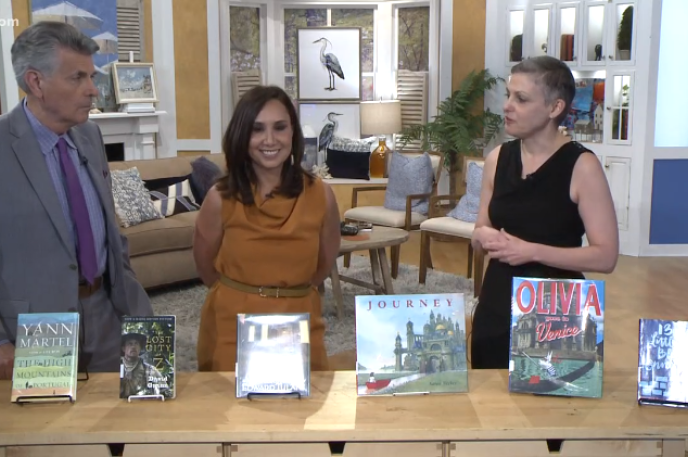
Dana Eure of Charlotte Mecklenburg Library discusses six travel titles with the hosts of WCNC's Charlotte Today  on July 11, 2019.

Charlotte Today: Take a trip with the Library

July 12, 2019

Library Branch Channel Leader and Interim Director of Libraries, Dana Eure, made a guest appearance on WCNC's Charlotte Today on Thursday, July 11, 2019 and shared six titles for travel and adventure. 

click here to search titles

Adult fiction

The High Mountains of Portugal by Yann Martel

In Lisbon in 1904, a young man named Tomás discovers an old journal. It hints at the existence of an extraordinary artifact that--if he can find it--would redefine history. Traveling in one of Europe's earliest automobiles, he sets out in search of this strange treasure. Thirty-five years later, a Portuguese pathologist devoted to the murder mysteries of Agatha Christie finds himself at the center of a mystery of his own and drawn into the consequences of Tomás's quest. Fifty years on, a Canadian senator takes refuge in his ancestral village in northern Portugal, grieving the loss of his beloved wife. But he arrives with an unusual companion: a chimpanzee. And there, the century-old quest comes to an unexpected conclusion.


Adult nonfiction

The Lost City of Z by David Grann

A grand mystery reaching back centuries. A sensational disappearance that made headlines around the world. A quest for truth that leads to death, madness or disappearance for those who seek to solve it. The Lost City of Z is a blockbuster adventure narrative about what lies beneath the impenetrable jungle canopy of the Amazon.


Youth fiction

The Miraculous Journey of Edward Tulane by Kate DiCamillo

Edward Tulane, a cold-hearted and proud toy rabbit, loves only himself until he is separated from the little girl who adores him and travels across the country, acquiring new owners and listening to their hopes, dreams and histories.


Picture Books

Journey by Aaron Becker

Using a red marker, a young girl draws a door on her bedroom wall and through it enters another world where she experiences many adventures, including being captured by an evil emperor.


Olivia Goes to Venice by Ian Falconer

On a family vacation in Venice, Olivia indulges in gelato, rides in a gondola and finds the perfect souvenir.


Teen fiction

13 Little Blue Envelopes by Maureen Johnson

When 17-year-old Ginny receives a packet of mysterious envelopes from her favorite aunt, she leaves New Jersey to criss-cross Europe on a sort-of scavenger hunt that transforms her life.

Thumbnail
The Charlotte Mecklenburg Library's Summer Break program is embracing STEAM this  year

Summer Break brings the STEAM!

July 12, 2019

Summer Break is well under way! There is still plenty of time to log your reading time and activities, or even sign up if you have not yet done so! While reading is always a focus at the library, we also have a lot of opportunities to learn about science, technology, engineering, art and math. STEAM is a hot topic these days and Charlotte Mecklenburg Library has options for all ages to get involved.

Of course, there are lots of great books with a focus on STEAM. Newer titles you can find at the Library are suggested below.

Want to build your own app? There’s a book for that!

For teens and adults:
Swift Programming in Easy Steps by Darryl Bartlett

Build Your First Web App: Learn to Build Web Applications From Scratch by Deborah Levinson

Beginning Programming With Python by John Mueller

For children:
Programming Awesome Apps by Heather Lyons

Get Coding! Learn HTML, CSS, and JavaScript and Build a Website, App, and Game

Coding for Beginners Using Python by Louie Stowell

The Everything Kids’ Scratch Coding Book by Jason Rukman


Interested in learning more about the wildlife in your neighborhood?

For teens and adults:
Birds of the Central Carolinas: Including Ornithological Records and Firsthand Accounts From the Civil War Era to Today by Donald Seriff

Make a Home for Wildlife: Creating Habitat on Your Land: Backyard to Many Acres by Charles Fergus

For children:

Weird but True! Animals: 300 Outrageous Facts about Wacky Wildlife

A Seed Is the Start by Melissa Stewart

Many of our branches have one-on-one technology tutoring to help you with your tech needs. Whether you need help creating a spreadsheet or figuring out how to download the Library’s free ebooks, contact your local branch to see how we can help. 

Teens and preteens should check out the Messy Makerspace at ImaginOn! During the open hours, teens and preteens can play around with all of the fun stuff, including a 3D printer. ImaginOn also offers specialized programs that focus on a specific projects such as screen printing

There are STEAM programs for school-aged kids almost daily at the Library, so be sure to look at our full listing of options, ranging from programs about different building materials to making your own ice cream!

Also, be sure to visit our online resources which are available 24/7 on our website!  
Universal Class and Lynda.com have excellent learning courses and videos on countless topics, including coding and web design. Learn to use whichever program you prefer - Python, Java, MySQL, Git and more. All you have to do is create an account, which is free with your library card!

Additionally, PowerKnowledge Life Science, Physical Science and Earth & Space Science are great resources for kids. Ideal for third to sixth graders, each source is full of articles, videos, games and even ideas for science experiments.

Whatever and however you decide to learn, remember to log it as a learning activity on your Summer Break account and continue to have a great summer!

Thumbnail
Participants learn camera techniques in Finding Home Again

Finding Home Again at the Library

July 16, 2019

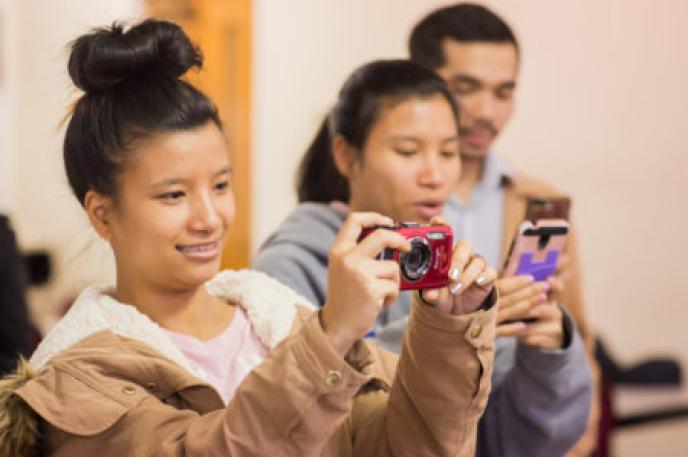
Charlotte Mecklenburg Library, ASC Culture Blocks and Photosynthesis Inc have teamed up to present a series of free photography classes at the West Boulevard Branch Library. Finding Home Again is open to photographers of all skill levels. You can use a cell phone camera or a professional level camera gear. No matter your past experience, you’ll learn techniques to enhance your photography skills.

This series is focused on the experiences of Montagnard first generation immigrants. The Montagnards, hilltribe people from Vietnam, were recruited by the U.S. Special Forces to serve as front-line fighters with the U.S. Army during the Vietnam War. After the United States withdrew from Vietnam, they were targeted by the Communist Vietnamese government as traitors and U.S. spies. Many Montagnards continued to fight the Vietnamese after the United States left, believing they were acting on behalf of the U.S. government. When they finally learned that the U.S. government no longer supported them, they were forced to flee as refugees.

In 1986, about 200 Montagnard refugees, mostly men, were resettled in North Carolina. A second group of about 400 came in late 1992. While these first groups of refugees faced considerable difficulties, most have adapted reasonably well. Since that time, additional families have come, especially relatives and persons released from re-education camps (prisoners of war). In 2002, another 900 Montagnards were resettled in North Carolina. This last group brings with them troubled histories of persecution, and few have family or political ties with the established Montagnard communities here. Their resettlement is proving to be much more difficult. There are about 5,000 Montagnards in North Carolina. More than half of these are in the Greensboro area, but there are significant populations in Charlotte and Raleigh, as well.

Join others in your community as we explore ways to use photography to document memories, reflect on the immigration process, and/or to share your experience of being in Charlotte, NC.

Register now for one of the classes by clicking on the date you wish to attend.

ASC Culture Blocks and Photosynthesis Inc. Presents: Finding Home Again - all sessions at West Boulevard Library:

Saturday, July 20, 2019 2 p.m. to 4 p.m.

Saturday, August 17, 2019  2 p.m. to 4 p.m.

Saturday, September 28, 2019  2 p.m. to 4 p.m.

Saturday, October 19, 2019  2 p.m. to 4 p.m.


Thumbnail
The Charlotte Mecklenburg Library provides tools and resources that make traveling a breeze with your Library card.

Traveling with your Library card

July 16, 2019

Whether you're planning a trip for summer, fall, winter or spring,  be sure to use your Charlotte Mecklenburg Library card for all your travel needs!

Before You Go:

Every smart traveler knows to pack lightly and plan early.  We always have traditional guidebooks at every location, but here are some digital suggestions to leave room for more souvenirs and help you navigate your travels: 

  • Learn the language of the country you’re visiting by downloading Mango Languages app, free with your library card, to your smartphone. 
  • Rent a Wi-Fi Hotspot if you’re not sure about the cost or availability of internet access (only available for use in the continental U.S.). 

Free Entertainment:

Your suitcases are packed, and your reservations are confirmed.  Pass the time on your flight or in the car with these audiobook and magazine suggestions: 

  • Compare the television show Game of Thrones with the books by listening to the George R.R. Martin series

Staycation:

You don’t have to travel far to have a great experience with these free ideas!

  • Trade your sunglasses for a pair of VR glasses Thursday, July 25 at our Beatties Ford Road Library for an Armchair Travel program.  Head to exotic locations like Thailand without leaving town! 
  • Learn about a new culture, such as Japanese, Chinese, French or Spanish, through Universal Class.
  • Escape the brutal Carolina heat by watching Antarctica--A Year On Ice, Meru: Mountain Climbing in the Himalayas, or more than 220 travel videos on our video service, Kanopy
  • Mark your calendars for a fall travel discussion series at our Morrison Library September 18.

Whether you’re traveling by air, sea or car, take the Charlotte Mecklenburg Library with you this summer.

Thumbnail
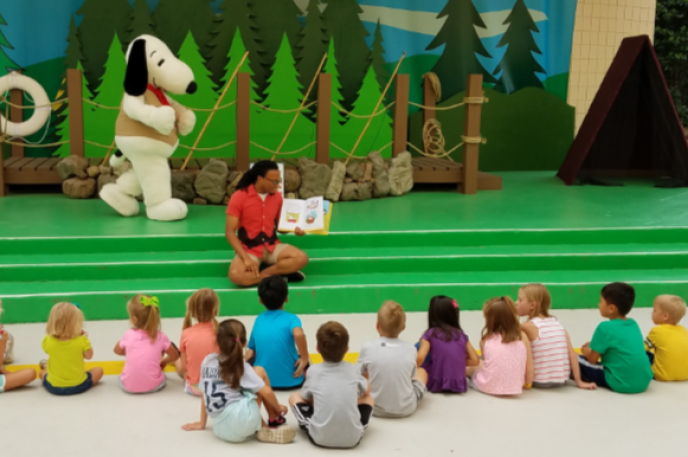
Snoopy Storytime at Carowinds Library Week in partnership with the Charlotte Mecklenburg Library

Enjoy Carowinds Library Week July 22-28

July 17, 2019

Don’t forget!

Library Week at Carowinds is next week.  And by the way, we’ll have Storytimes too!

Charlotte Mecklenburg Library cardholders can get discounted tickets to the Carowinds theme park from July 22, 2019 through July 28, 2019.

To purchase discounted tickets, Library cardholders can click the button below and login with the username CM and password LIBRARY (case sensitive).

Discounted tickets are good Monday, July 22, 2019 through Sunday, July 28, 2019.

PURCHASE CAROWINDS LIBRARY WEEK TICKETS

Storytimes at Carowinds!

During Library Week, the Library will provide three Storytimes each day of the week at the Peanuts in the Camp Theater.  Hang out with all your favorite Peanuts pals and participate in Storytime with some of the library’s best staff!

  • Monday, July 22, 2019 – 2:30 p.m., 3:30 p.m. and 4:30 p.m.
  • Tuesday, July 23, 2019 – 2:30 p.m., 3:30 p.m. and 4:30 p.m.
  • Wednesday, July 24, 2019 – 2:30 p.m., 3:30 p.m. and 4:30 p.m.
  • Thursday, July 25, 2019 – 2:30 p.m., 3:30 p.m. and 4:30 p.m.
  • Friday, July 26, 2019 – 2:30 p.m., 3:30 p.m. and 4:30 p.m.

Check out what’s going on at the Library!

Summer Break Events


Comments? Questions?

Are you having problems with the Summer Break website or your account? Do you have questions about the program? Feel free to stop by your local library for assistance, give us a call at 704-416-0101 or email us at [email protected].