

This blog post was originally written by Julie Zwetolitz, former Robinson-Spangler Carolina Room Intern, and edited and updated by Chauna Carr, RSCR Digital Production Librarian.
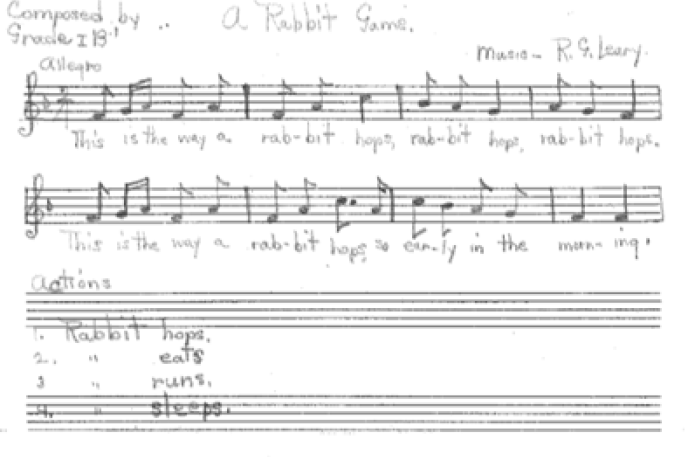
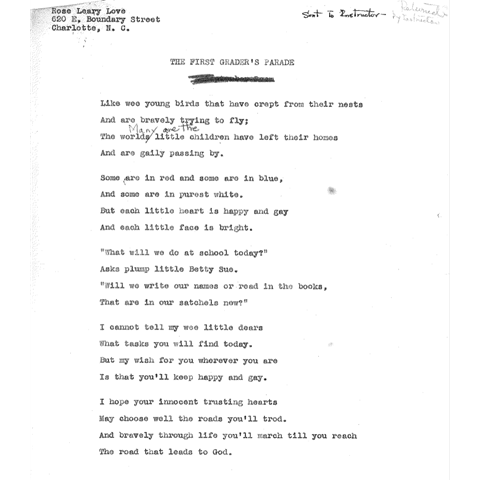
Rose Leary Love was a teacher, poet, musician, and writer born in 1898 in the Brooklyn neighborhood of Charlotte, North Carolina’s Second Ward. A dedicated educator, she taught in both Greensboro and Charlotte public schools from 1925 to 1964. She also spent a year teaching in Indonesia while her husband, an instructor at Tuskegee Institute (now Tuskegee University), participated in a technical assistance mission.
Image
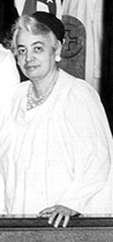
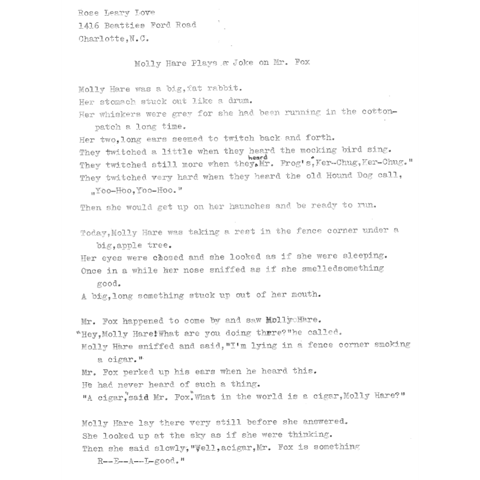
Love’s passion for reading and writing was deeply influenced by her parents, John and Nannie Leary. Her father was a lawyer, and her mother was a schoolteacher at Myers Street and Second Ward schools. Throughout her life, Love published numerous poems and songs and authored two children's books, Nebraska and His Granny and A Collection of Folklore. She also contributed to the North Carolina Teachers Record.
Image
Image
Image
Her academic journey was equally impressive, as she attended Barber-Scotia Seminary, Johnson C. Smith University, Hampton Institute, and Columbia University.
Image
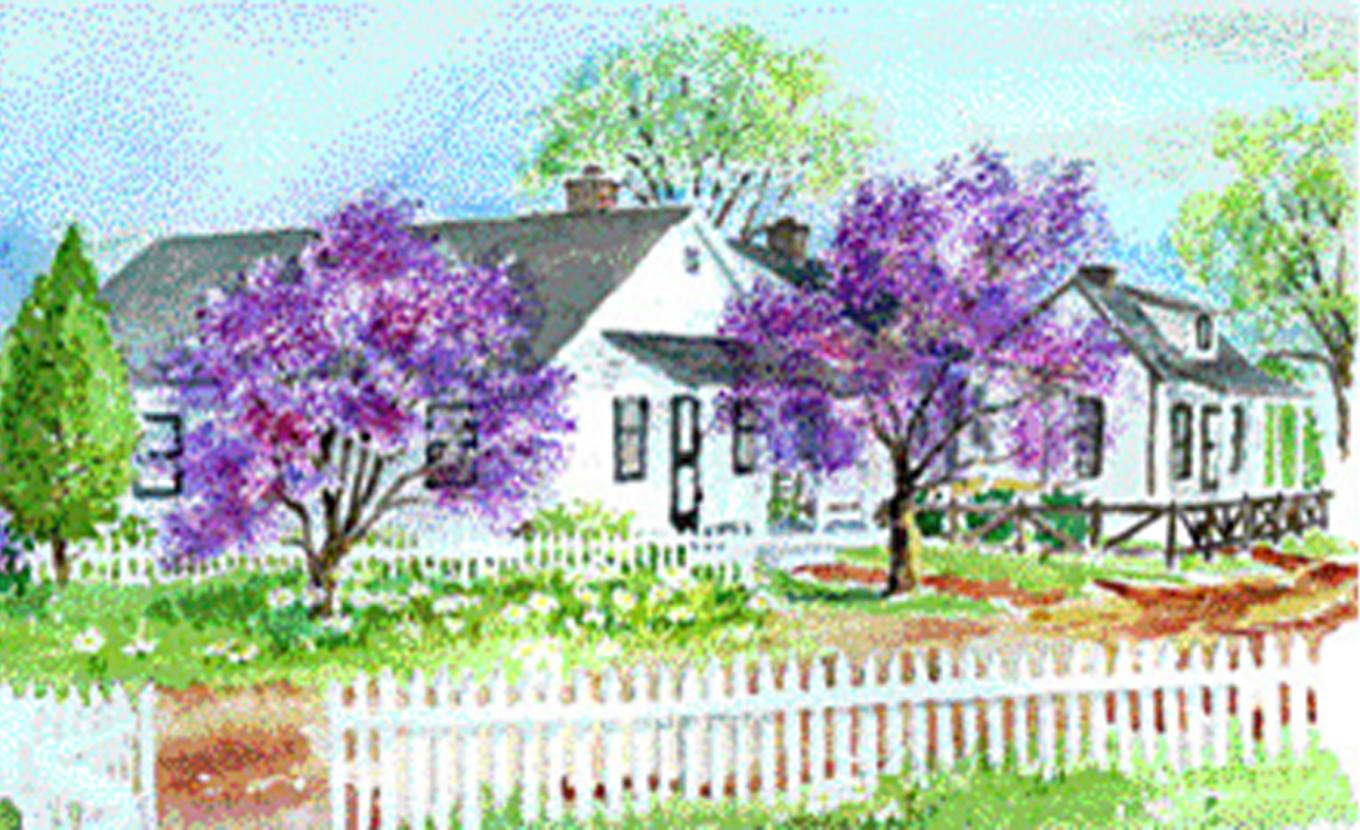
Growing up in Brooklyn, Love’s family home was located near present-day Boundary Street and I-277. She described it as a “roomy and old-fashioned” house with a wrap-around porch, filled with children and a mother’s love. Bookshelves in their home overflowed with fiction, law, travel, history, religion, and music books. As a child, she attended Myers Street School, which now stands as the Mecklenburg County Aquatic Center.
Love documented her childhood experiences in Brooklyn in her memoir, Plum Thickets and Field Daisies. After her passing in 1969, she left the original manuscript in the care of close friends. As Brooklyn changed and much of its history faded, the memoir’s historical significance grew. Recognizing its value, her friends donated it to the Robinson-Spangler Carolina Room for archival preservation.
Since then, Plum Thickets and Field Daisies has become a crucial resource for students, scholars, and authors, aiding in research papers, doctoral theses, and even a theatrical script. The warmth, humor, and vivid recollections in her writings highlighted the importance of sharing her memories with a wider audience. In 1996, the Public Library of Charlotte and Mecklenburg County published her memoir, ensuring her legacy would continue to inspire future generations.
Search her finding aid here: Rose Leary Love and make an appointment with the Carolina Room to research her collections. Visit our page here for more resources.
Tyler Wilmoth
twilmothpic.jpg
Not quite ready say goodbye to March - or our Community Read? Still have more questions about art, Chinese culture, or museums?
Take a look at our panel, which featured two experts on Chinese art in conversation with Anselm Smith, an Adult Services Library Associate at the Cornelius branch. The conversation touched on the history of the Zodiac heads that featured so prominently in the novel, the differences between Chinese and Western art, the tension between "regional" and "national" in Chinese art practices, the ideal museum, and more.
Additionally, here are some further recommendations from our panelists:
Dr. Ruiying Gao recommended Peter Hessler's Other Rivers: A Chinese Education, which has insight into the lives of two generations of Chinese students.
She's also looking forward to the Osaka City Museum of Fine Arts’ exhibition of Japanese National Art Treasures. In particular, she's excited about Letter of Distress and Indignation, a calligraphy piece associated with Wang Xizhi (303-361), who is regarded as the greatest calligrapher in China. This specific piece was likely collected by the Japanese imperial house as early as the 8th century.
Dr. Yukina Zhang is a fan of LuYang's work, citing LuYang's play with gender, Traditional Chinese Medicine, spirituality, and the video games, anime, and manga subculture of the 1990s.
She also recommends the work of Lara Jaishree Netting. Her book, A Perpetual Fire: John C. Ferguson and His Quest for Chinese Art and Culture, looks at the life of an American collector of Chinese art who was discussed during the panel discussion and who serves as a model for Chinese-American friendship and appreciation.
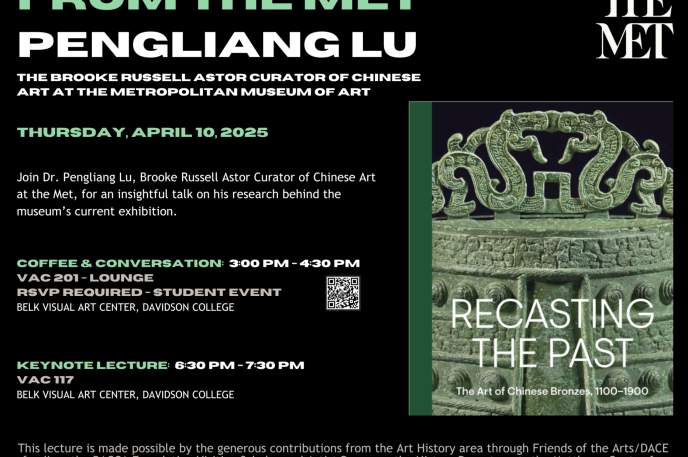
For those in the area interested in Chinese bronzes, there will be a lecture by Dr. Pengliang Lu, Brooke Russell Astor Curator of Chinese Art at the Metropolitan Museum of Art, at Davidson College on Thursday, April 10, from 6:30 - 7:30.
See the flyer for more information!

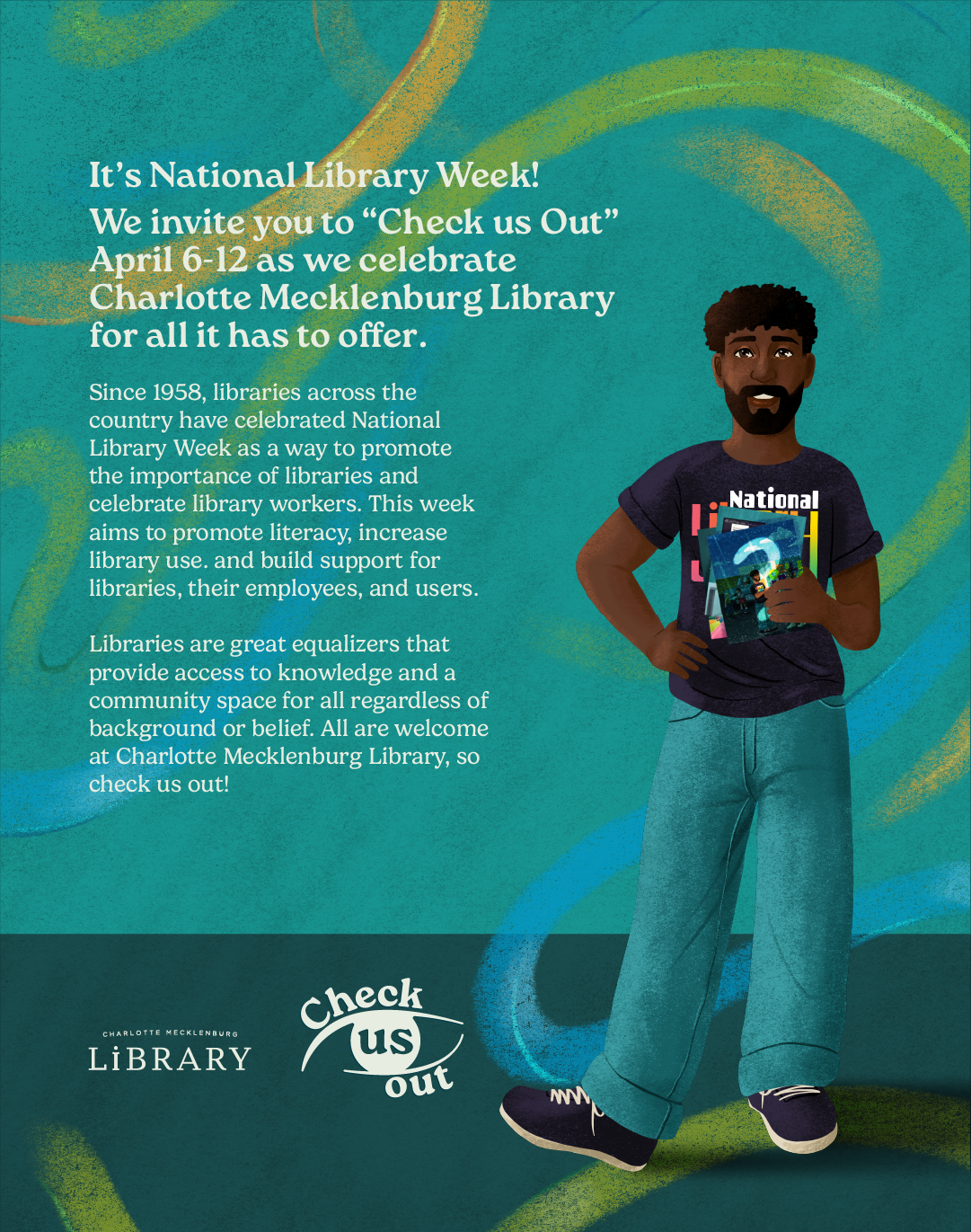
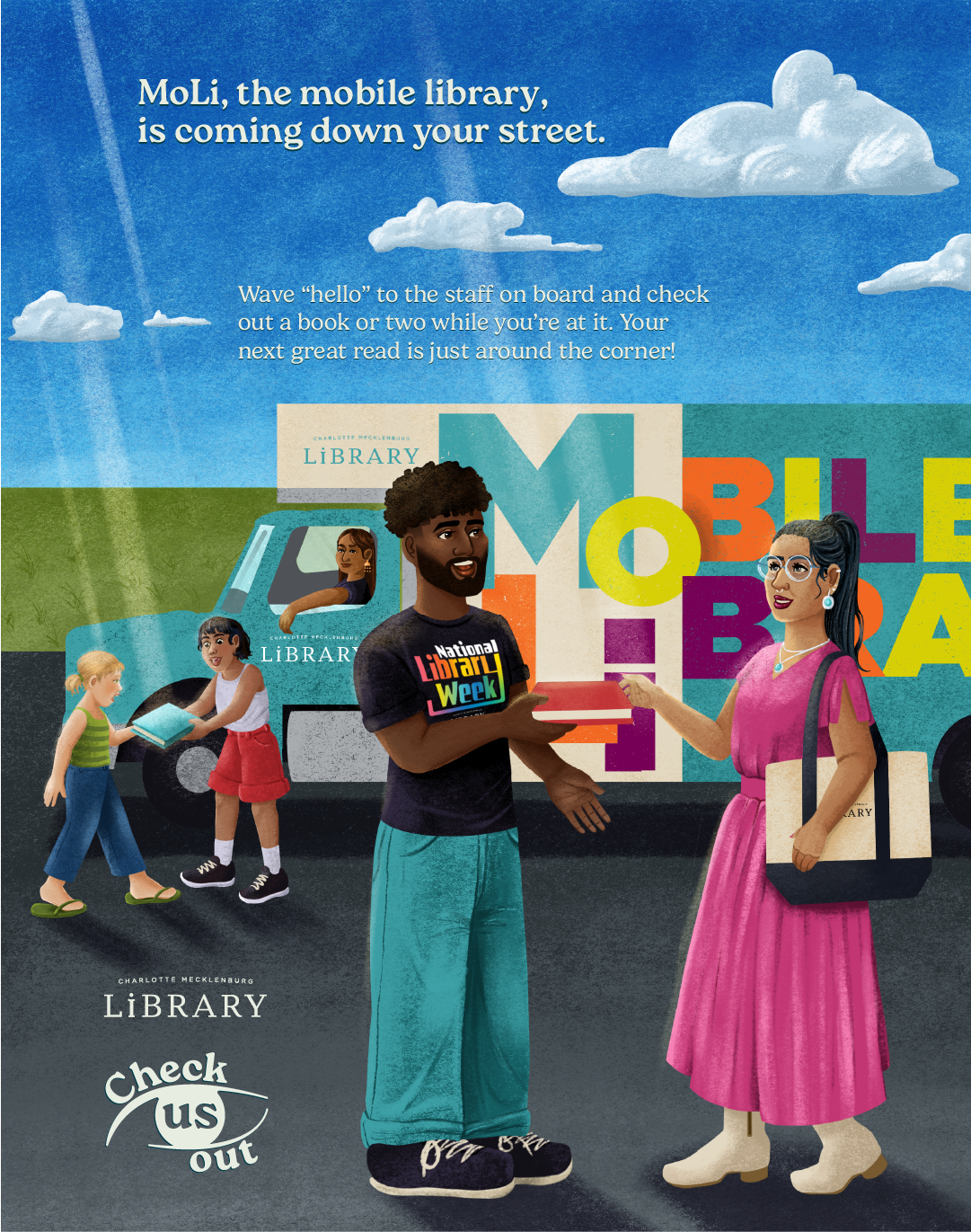
National Library Week (NLW) is organized by the American Library Association (ALA) as "an annual celebration highlighting the valuable role libraries, librarians, and library workers play in transforming lives and strengthening our communities." It is from April 6 to April 12.
We have prepared a series of images that highlight a few things that the Library offers the community!
Image
Image

Image

Image
Image

Image

Image

Be sure to follow CML on social media and join the conversation by using the hashtag #NationalLibraryWeek

Looking to earn community service hours this summer as a teen volunteer? Charlotte Mecklenburg Library is looking for responsible teens (ages 13-17) who enjoy working with the public, helping others, and giving back to their community. Applications open today, April 15th, at 3:30pm, which is when teens will be able to view available opportunities and apply. Applications will be accepted until the end of the month or until a branch reaches capacity.
If you do not see a position posted for your preferred location, then a position is no longer available, and you will need to apply to another location. While there are a limited number of opportunities, almost all locations are participating in this program. Teens may only apply to one location per semester. Please note that applying does not guarantee a position.
After you apply, someone from the library will contact you to set up an interview if you meet qualifications. If you wish to inquire about your application, please reach out to the branch where you applied to follow up. Please apply on the Volunteer page. Click on Become a Volunteer and search for “Summer VolunTeen” opportunities.
Still have questions? Check our VolunTeen FAQs for more details! We look forward to seeing your application soon!
Thumbnail
Celebrate National Volunteer Week April 20-26, 2025 with the Library
April 16, 2025
This blog was written by Chauna Wall, Volunteer Coordinator for Charlotte Mecklenburg Library.
Volunteering is vital, an essential workforce to a community’s wellbeing. So many local and national programs from education to disaster relief to the arts are underpinned by the contributions of volunteers. Volunteers of all ages foster a community of connection and engagement.
Today we enter a week-long celebration called National Volunteer Week which runs from April 20 - April 26, 2025
During this week we take the opportunity to shine a light on the people that inspire us to serve for the benefit of the greater good. Volunteerism empowers individuals to find their purpose, to take their passion and turn it into meaningful change. When you answer the call to make a difference, we make progress in “Improving Lives and Building a Stronger Community”, our core mission.
We celebrate our volunteers for giving their time and talents to Charlotte Mecklenburg Library and the many volunteers who stand with us in promoting inclusion, education and literacy to the entire community.
Every day our volunteers inspire us and help us create a more educated and literate community. Never doubt you make a measurable difference. Last year 1,235 volunteers gave us over 25,000 hours which equates to a value of over $800,000!
Image
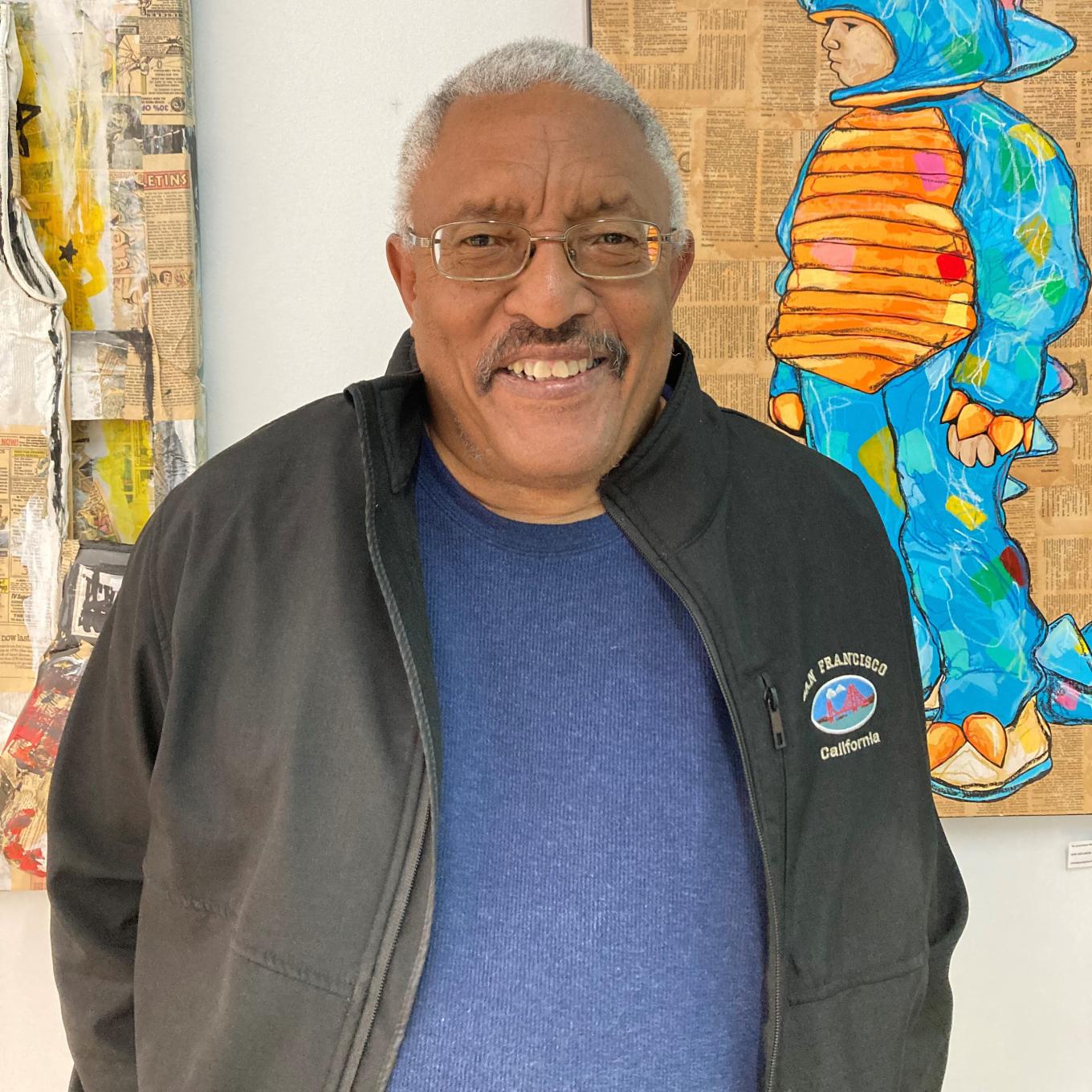
Arthur “Buzzy” W.
Volunteer at South County Regional Library
Our Portuguese, Spanish, and English Conversation Clubs have many dedicated members, and we have become friends. We have become family. We help each other by listening to each other and we make new friends.
Image
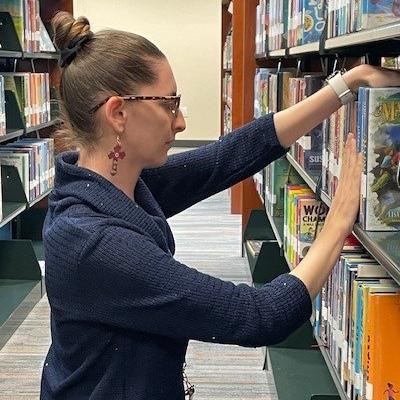
Ashlyn W.
Volunteer at Mint Hill Library
I appreciate meeting new people, making new connections and the ability to contribute and help others.
Image
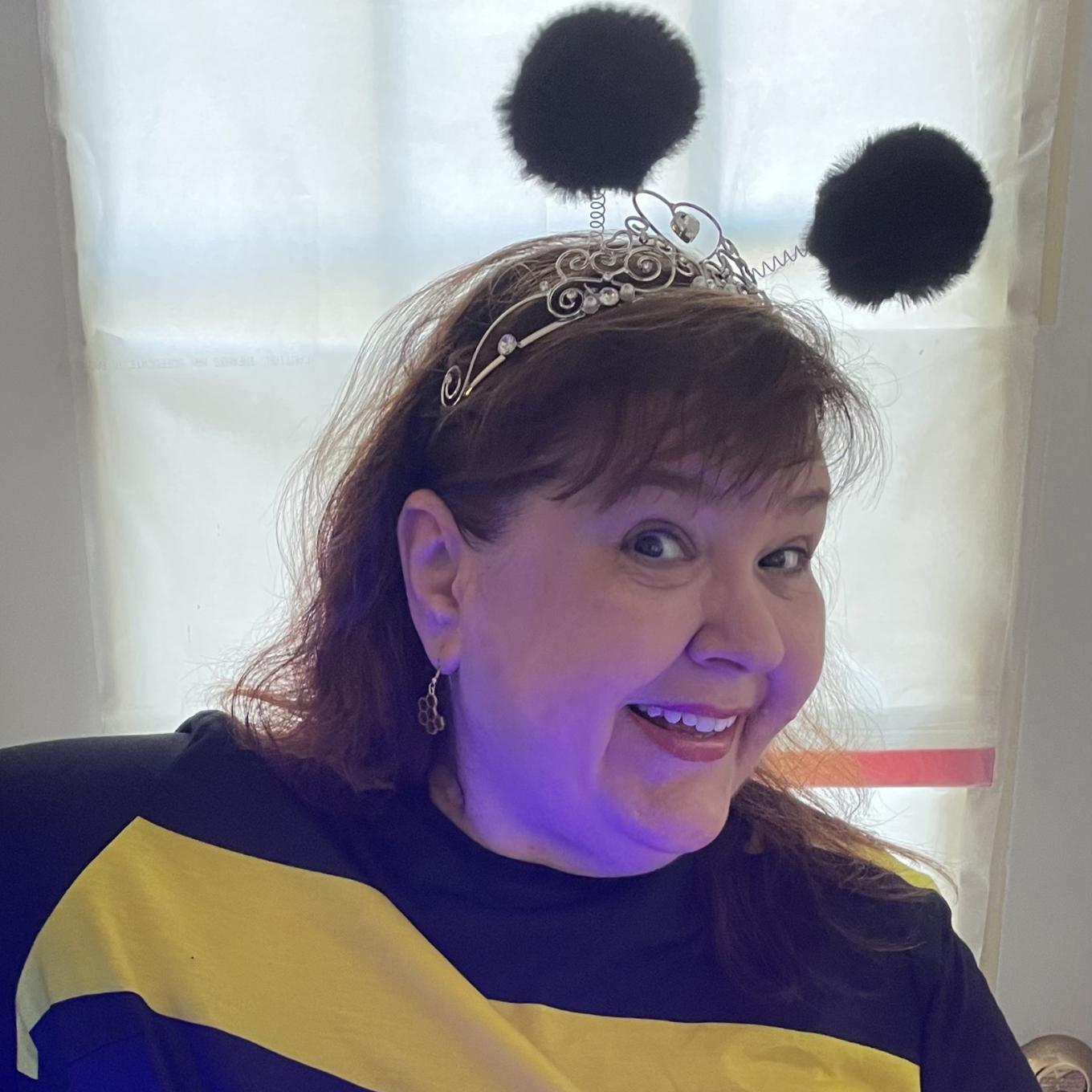
Becky G.
Volunteer at Mint Hill Library
I worked for Mecklenburg County for 30+ years and I like giving back to the community. Every act of kindness, no matter how small, can make a great impact.
Image
Carol L.
Volunteer at Independence Regional Library
I love being able to help make Library users feel more comfortable and supported.
Image
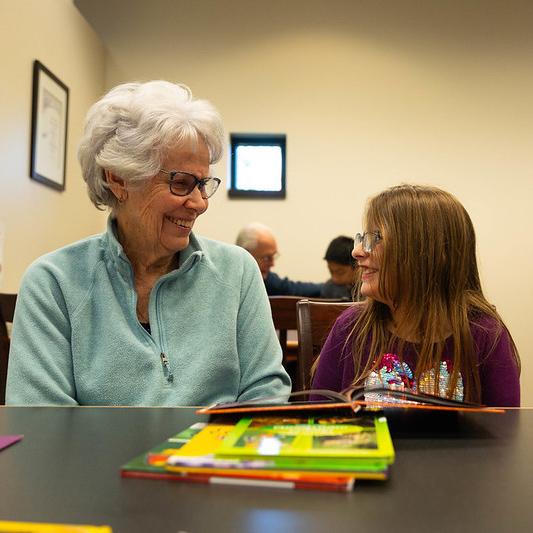
Kathy M.
Reading Buddy at Mint Hill Library
It feels good to think someone might enjoy reading a little better because I volunteered.
Image
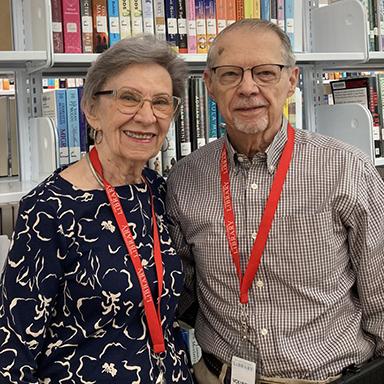
Kay L. and Jack L.
Volunteers at South County Regional Library
I volunteer because I’ve always read, and libraries give people an opportunity to broaden their minds. - Kay
The Library is such a multifaceted resource that anything that I can do to make it more available to the community is worth my time and effort. - Jack
Image
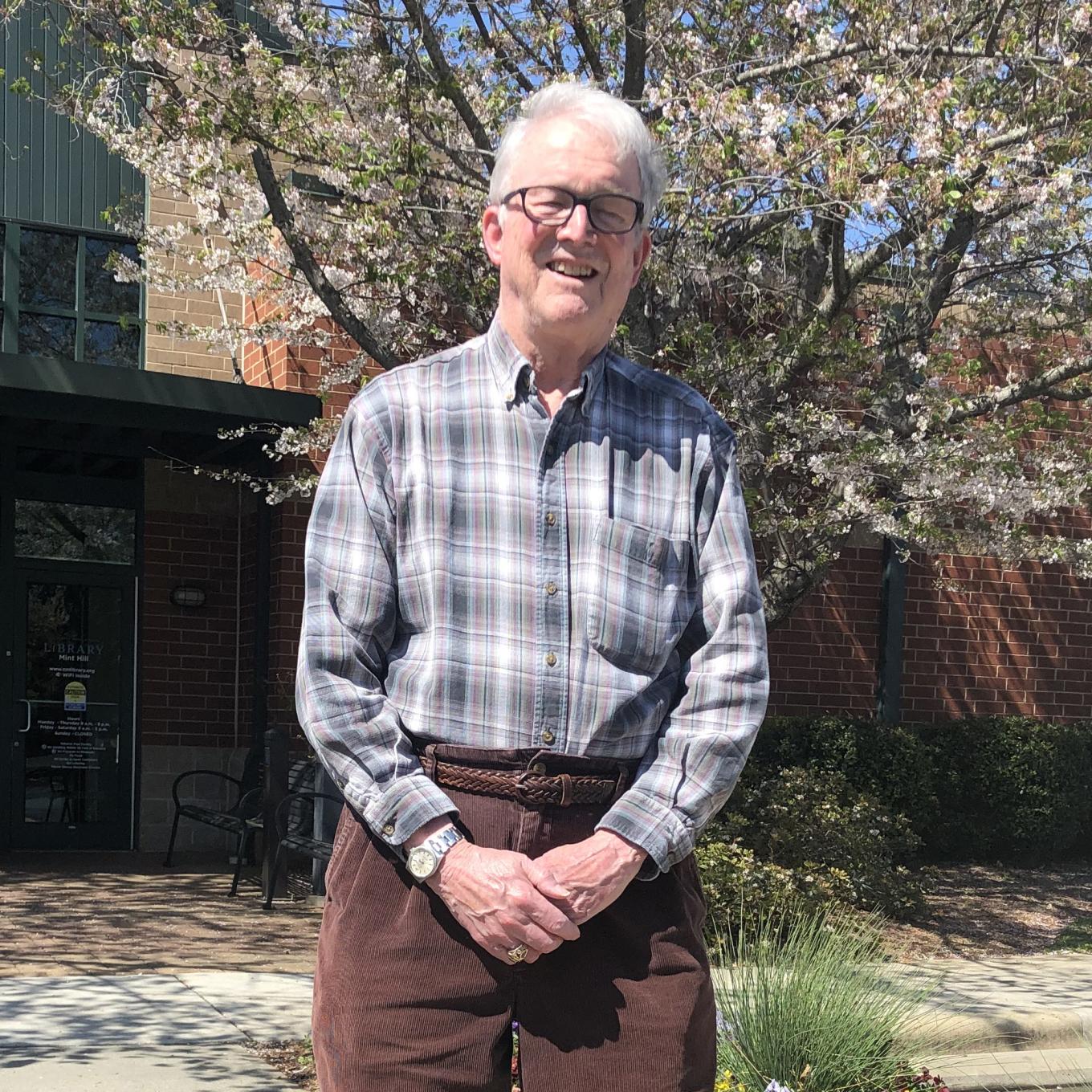
Lance W.
Volunteer at Mint Hill Library
Volunteering at the Library is a chance to give back. The staff at Mint Hill are wonderful!
Image
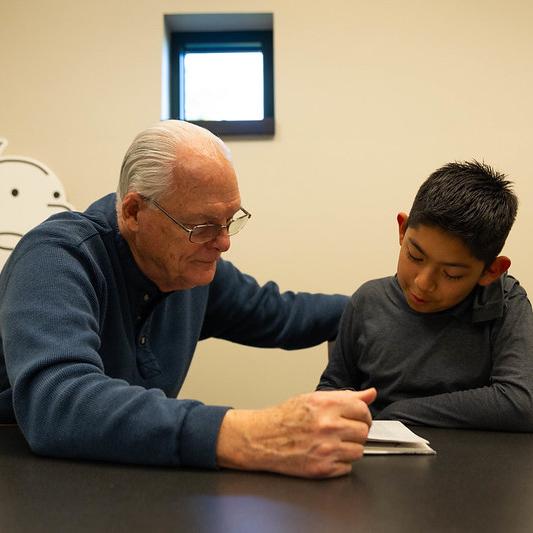
Lee M.
Volunteer at Mint Hill Library
I’ve truly been blessed. I have always loved to read. I feel like I’m giving back some of the good things people have done for me.
Image
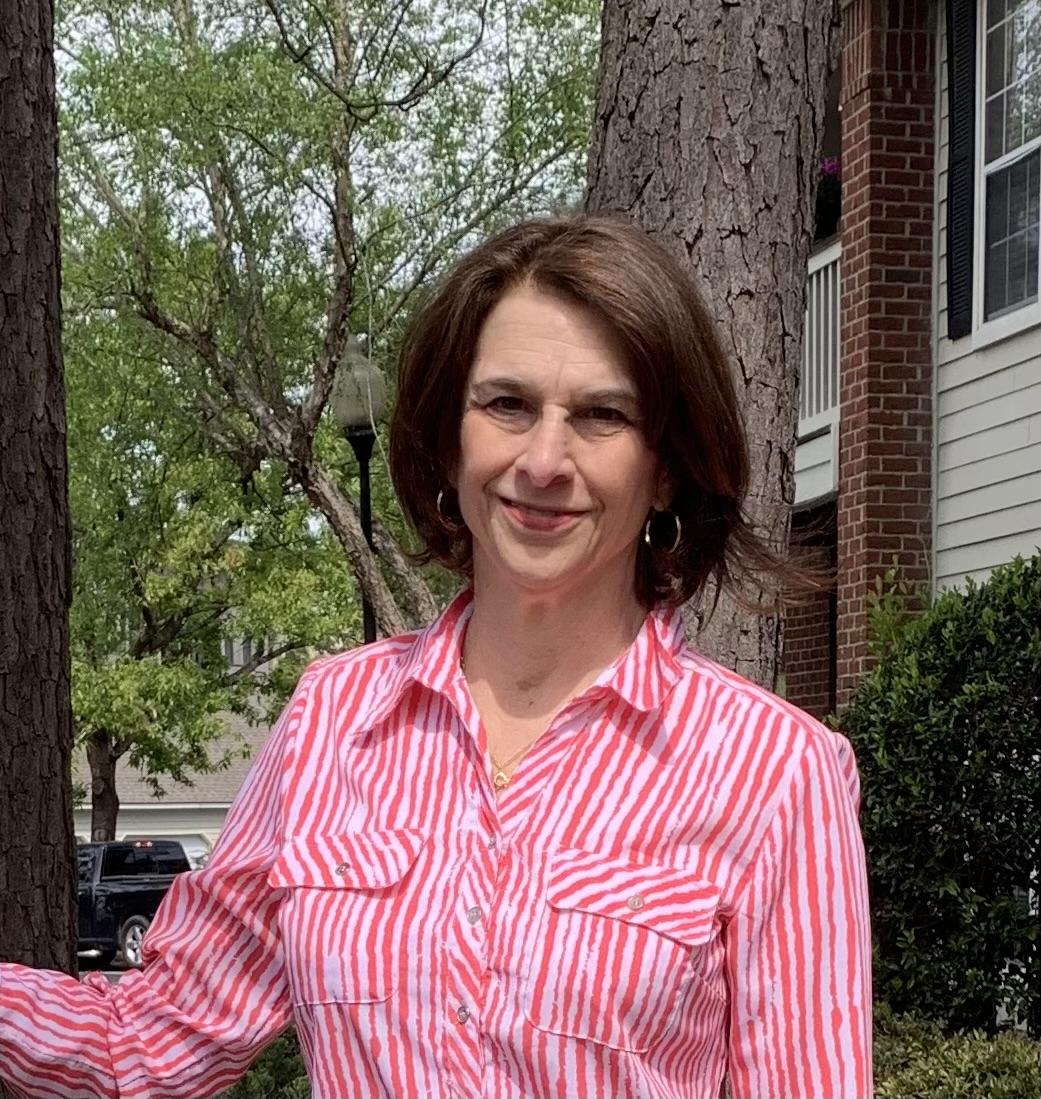
Marianne L.
Volunteer at Matthews Library
Library books have always been a part of my life. As I grew older, I realized not everyone had access to books at home, but the Library filled that need. What could be a better way to give back to your community than to support the Library?
Image
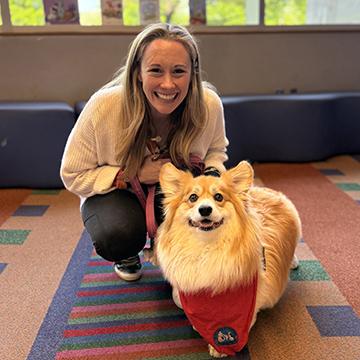
Meg S. and Winnie
Paws to Read Volunteers at ImaginOn
Helping young people practice their reading with Winnie unlocks a new confidence in reading and speaking skills that opens doors forever.
Image
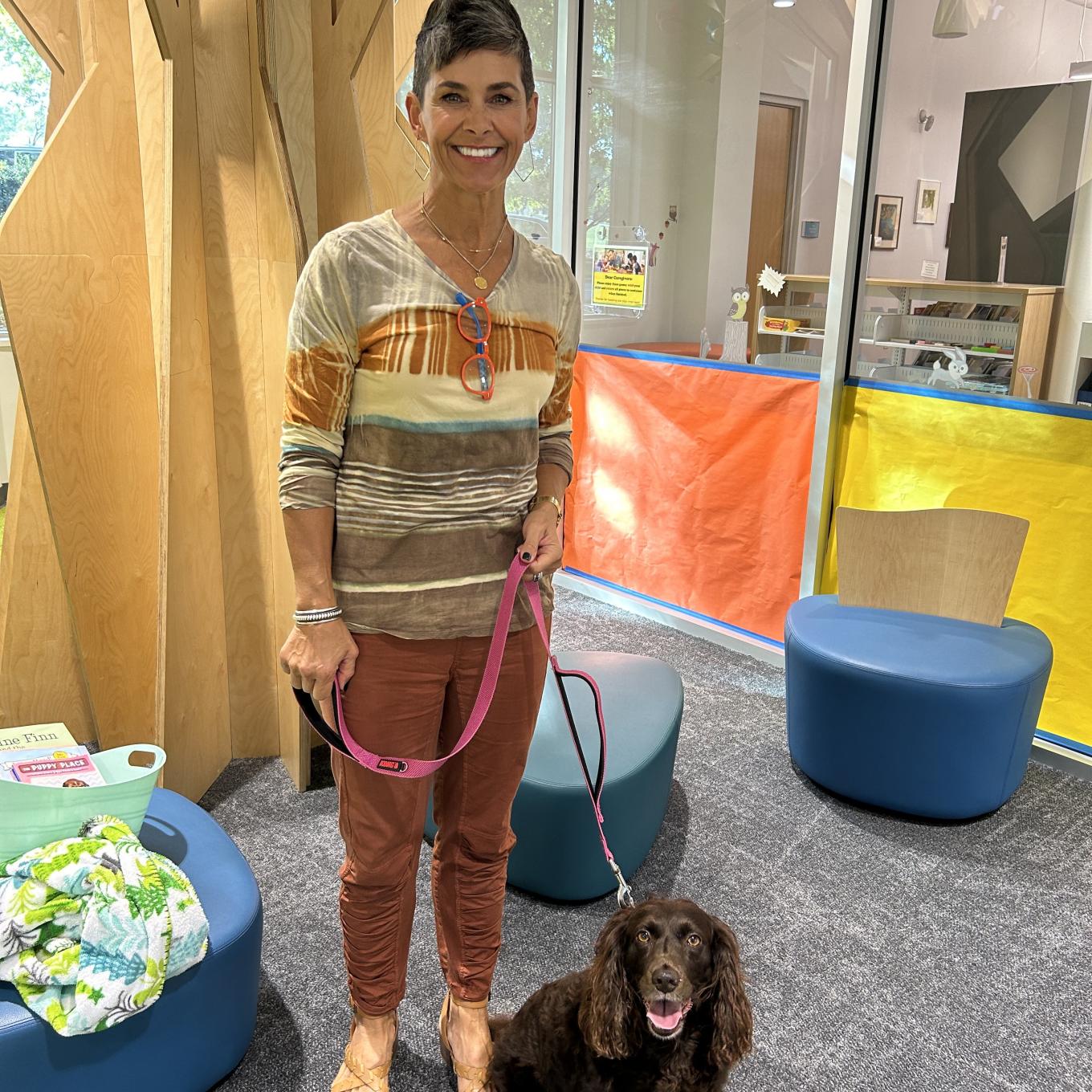
Pam M. and Seneca
Paws to Read volunteers at South County Regional Library
Seneca's enthusiasm, bright eyes, wagging tail, and willingness to bathe for her favorite volunteer destination keeps us coming back! Belly and ear scratches are in full abundance as well!
Image
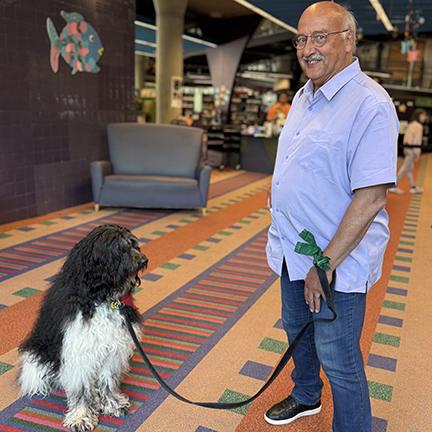
Robert M.
Paws to Read Volunteer at ImaginOn
No child should feel shame or fear when learning to read.
Image
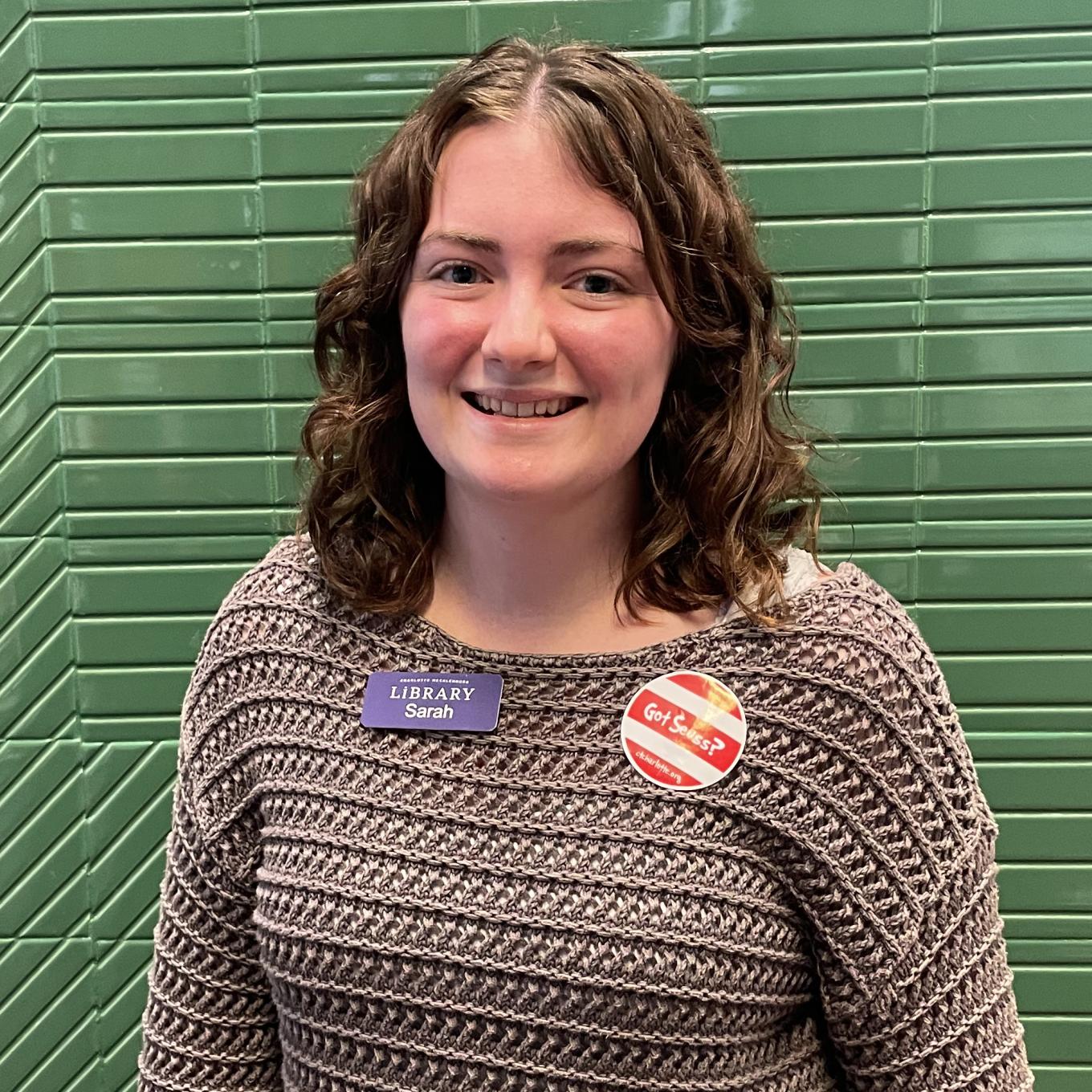
Sarah M.
Volunteer at ImaginOn
ImaginOn is such an amazing and creative space for kids, and the staff is very welcoming and kind.
Image

Steven K.
Volunteer at Mint Hill Library
I love helping with Reading Buddies, the Student Success Center, Día and EpicFest.
Image
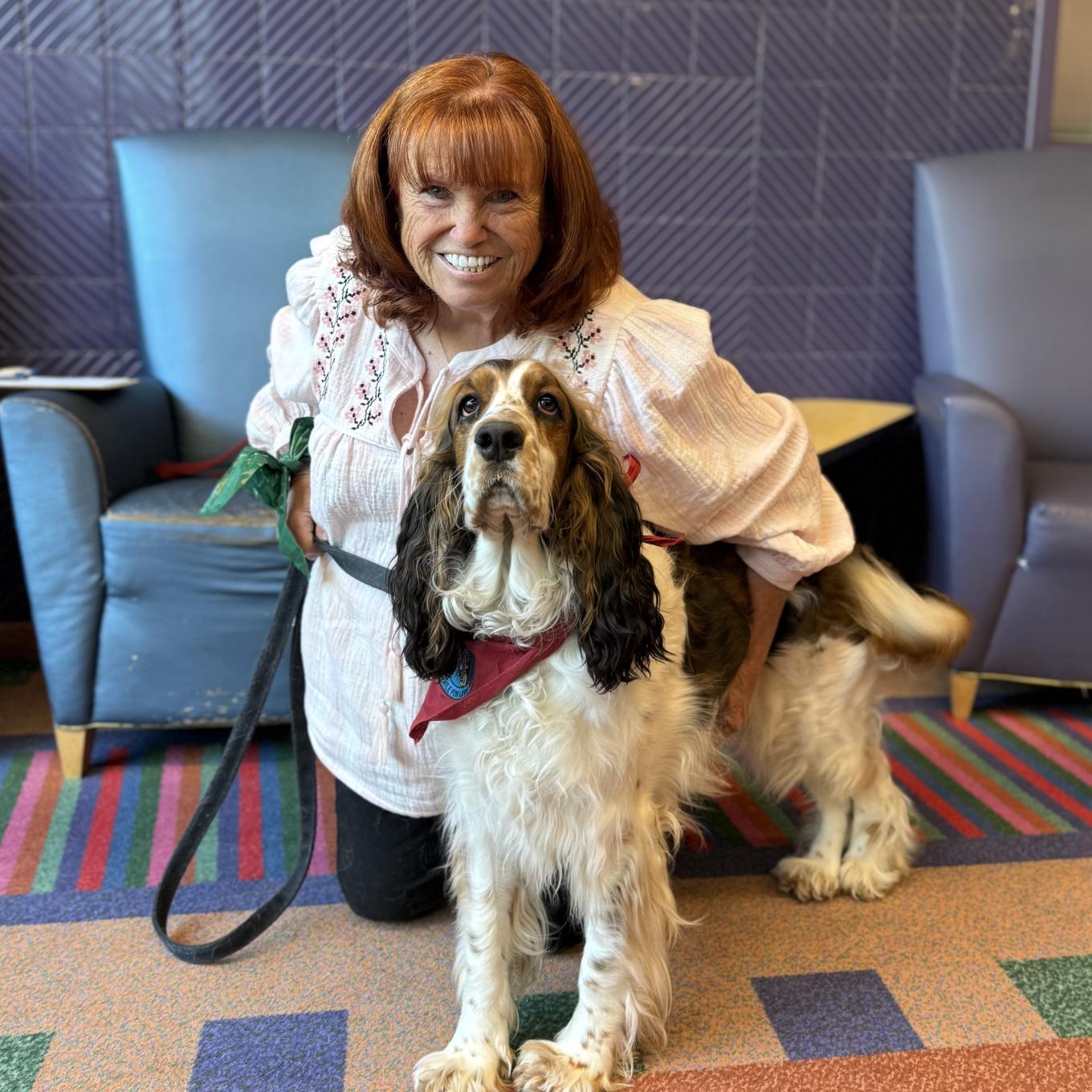
Nora M.
Paws to Read Volunteer at ImaginOn
A child may come in and be afraid of reading, so they will just pet the dog. Ultimately, they feel more comfortable and will find a book and sit and read.
Alicia, Volunteer at SouthPark Regional Library:
"I love children's literature, especially picture books with their creative writing and unbelievable illustrations. I also think children are funny. When you combine reading a funny book with a fun child...it makes the volunteer work a real joy! I love escaping with books and hope to inspire this generation to find joy in the words and illustrations of children's literature. Thank you to the Charlotte Mecklenburg Library system for making this possible."
Ben, Volunteer at SouthPark Regional Library:
"Technology can be daunting, but it's part of everyday life. I want people to feel more confident using their computers and phones. I don't know all the answers, so sometimes it becomes a quest with the person attending a class or tutoring session to see if we can find an answer or solution. The library offers Tech Titans 50+ programs, which is offered through a partnership with AARP, and it opened more ways I could volunteer."
Bernice Mar – CM Library Logistics Volunteer :
“Why do I want to volunteer? A strong library system is a vital part of every thriving community. This is a way for me to be an active part of a meaningful presence...an engine of sorts...that I believe is an essential, life-affirming resource that improves the quality-of-life for everyone (including non-library patrons). As a child, the library is where I discovered that books opened a new and exciting world of stories, language, images, colors and patterns. It was such a treat to come home with a stack of new books to explore! That positive experience contributed to and blossomed into a lifelong love for reading, writing, learning, and self-expression. Eventually that led to a longstanding relationship with the Mecklenburg library system and its programs after moving to Charlotte two decades ago. “
You will see our VolunTeens and our adult volunteers helping with the following:
- Adopt an Aisle which includes families and children 12 and under.
- Tech tutoring classes and one on one learning
- Leading writing groups
- Training to be Reading Buddies and help with Student Success Centers
- Prepping for branch book sales
- Shelving, pulling holds and helping with morning deliveries
- English as a Second Language programs
- Stocking Free Little Libraries all over Mecklenburg County
- The ever-popular Paws to Read program where even your trained dog can volunteer!
If I may give a grateful nod to those of you who help our staff shelve in the children's department (which isn’t for the meek), and a special thank you to the 28 staff who have taken on the role of Volunteer Point Person (VPPs) who guide and engage with our volunteers daily. They have worked diligently to make the Library a great experience for our volunteers.
Thank you for being a Library volunteer and helping deliver the magic of books, stories, technology and lifelong learning. You are a treasured and valuable part of our story.
Thumbnail
Don’t Throw That Away! A Spring-Cleaning Guide to Preserving Your Family History
April 16, 2025
This blog post was originally written by Shelia Bumgarner, edited and updated by Chauna Carr, RSCR Digital Production Librarian
Spring is a time for fresh starts and often, fresh piles of old stuff! While you’re sorting through closets, attics, and boxes of family mementos this season, don’t be too quick to toss things out. Some of those forgotten items may be more than just clutter; they could be important pieces of your family’s story or local history.
The Robinson-Spangler Carolina Room is here to help you figure out what to keep, what to toss, and what to consider donating. Plus, we’ll share how you can preserve those meaningful items for years to come.
What to Keep (and How to Keep It Safe)
Not sure if something’s worth keeping? When in doubt, hold onto anything with:
- Names, dates, or locations written on it
- Local or regional relevance (especially Charlotte/Mecklenburg County)
- Clear connections to your family’s story
- Visual or handwritten elements—photos, letters, drawings, etc.
Once you've decided to keep something, follow these basic care tips:
1. Handle items with care
Use two hands when lifting fragile objects and avoid excessive bending or folding. Take your time when turning pages, unrolling documents, or unfolding old fabrics. If it feels brittle, it probably is.
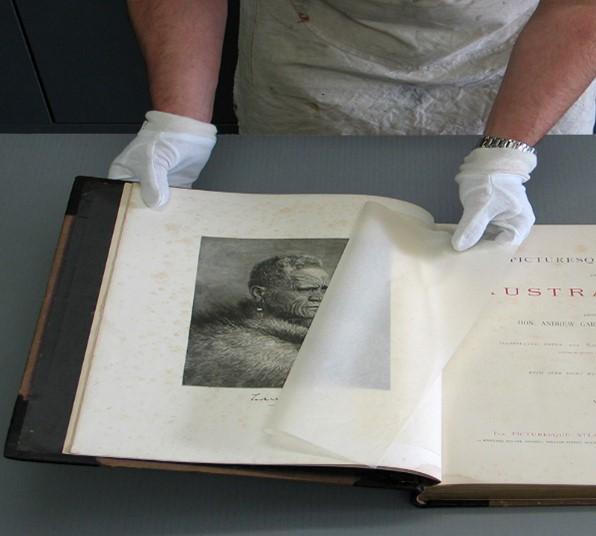
2. Wear gloves
Nitrile gloves are best for handling photographs, negatives, or anything with delicate surfaces. Clean, dry hands work in a pinch. And don’t forget to identify who’s in your photographs—use a soft pencil on the back, not ink!
Image
3. Work in a clean space
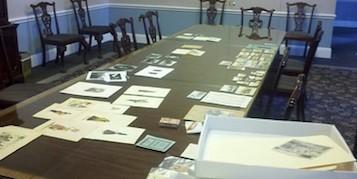
Keep snacks, drinks, and clutter far away from your materials. Work on a clean, flat surface with plenty of light and room to move things gently.
Image
4. Skip the tape and glue and metal fasteners.
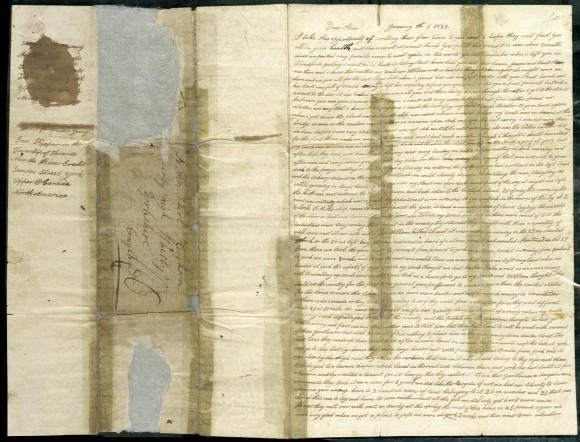
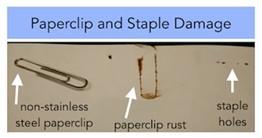
Avoid using adhesives like Scotch tape, rubber cement, and Elmer’s glue. These can yellow, dry out, and stain your materials over time. If something needs repair, use archival-quality products or consult a conservator. Steer clear of metal fasteners like paper clips, staples, and pins. These can rust, snag, or tear delicate documents. Instead, use plastic paper clips or archival-quality folders to group materials safely.
Image
Image
5. Store smart
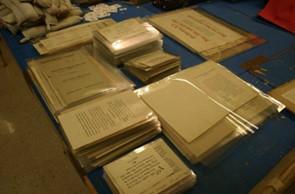
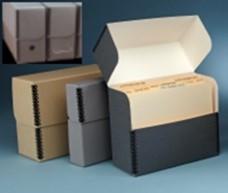
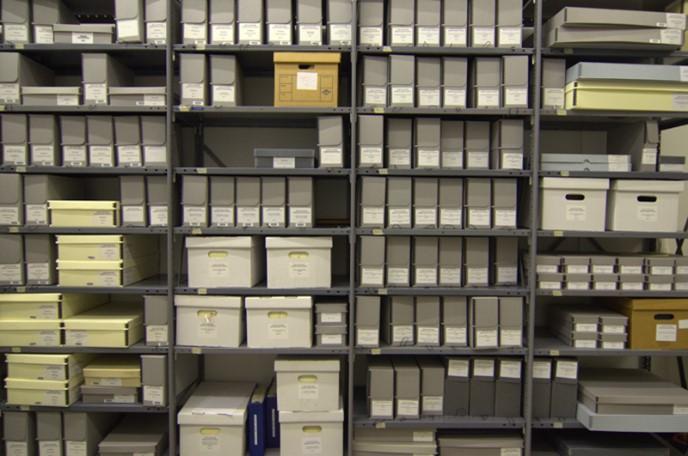
Acid-free boxes, folders, and sleeves provide the best protection. Don’t overstuff boxes, and remember: books, diaries, and albums should be stored flat—not upright, to prevent stress on the spine. Label clearly and store in a cool, dry, and dark space (think bedroom closet or under-the-bed storage).
🚫 Avoid attics, basements, garages, and direct sunlight.
Image
Image
Image
6. Document as you go
Context is everything! A photo is more meaningful when you know who's in it, when it was taken, and why it matters. Jot down family stories, memories, names, and places while they’re still fresh in your mind—your future relatives will thank you.
What to Toss (With a Second Look)
We get it, not everything can (or should) be saved. But before you haul that box to the curb, consider:
- Other homes for your stuff: Thrift stores, vintage shops, and specialty museums might want household items like linens, furniture, or art.
- Appraisals: If an item looks valuable or unusual, it may be worth getting it professionally appraised.
- Historical societies: Even if the Carolina Room can’t accept an item, other institutions might.
If your family materials help tell the story of Charlotte or Mecklenburg County, we’d love to hear from you. The Robinson-Spangler Carolina Room collects:
- Audiovisuals and home videos
- Business, club, and organization records
- Family papers and correspondence
- Maps and manuscripts
- Music (recorded or produced in Charlotte)
- Photographs and postcards
*All items must relate to Charlotte and Mecklenburg County history.
What we typically do not collect:
- Family Bibles (except copies of genealogical pages)
- Newspapers, Textbooks or Magazines (unless historical)
- Polaroids, large scrapbooks, or oversized 3D items
- Clothing or textiles (i.e. bedding, quilts, uniforms)
If you have something to share or want to learn more, email us at [email protected].
You can also explore our archival collections and digitized materials anytime by browsing our Finding Aids and The Vault.
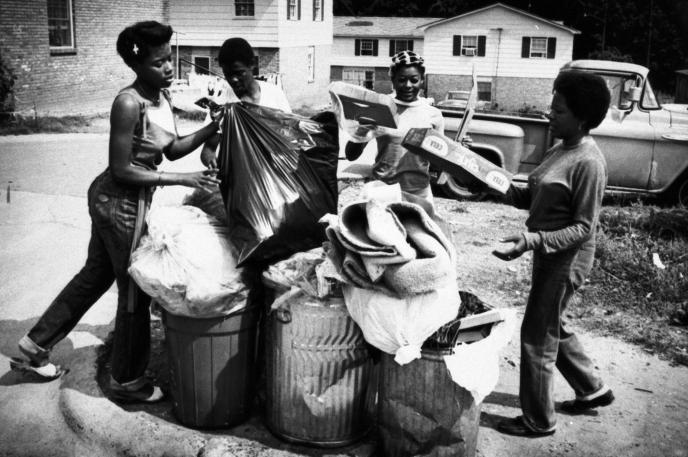
Cover image caption: Members of Project ME Chapter participate in a clean-up at Keyway Apartments, c. 1975. African American Album Image Collection, AA.2004.05.0855.16, Robinson-Spangler Carolina Room.
Thumbnail
"Get Curious" with the ImaginOn 2025 Summer Exhibit
May 13, 2025
This summer, ImaginOn is thrilled to host "Curious George: Let’s Get Curious!" from May 17th to August 23rd.
Explore the exhibit that introduces young children into the world of Curious George, leading visitors on a fun, meaningful adventures while emphasizing the central role that parents and caregivers play.
Based on the familiar characters in H.A. and Margret Rey’s classic stories and inspired by the animated television series on PBS KIDS, visitors can operate wheels to help George climb a building, sort and weigh fruits and vegetables at the produce stand, use science skills to putt a hole of mini golf, have their picture taken with the rocket from George’s space adventure, build a whirligig in the country, and visit the Museum within the Museum.
The 1,500 sq. ft. exhibit features:
• Apartment Building - Operate wheels to move George on pulleys from window to window. Climb the fire escape and climb inside to play with color, light and shadow.
• Sidewalk Produce Stand - Play customer or salesperson and explore shape, sorting, weighing and counting with fruit and vegetables.
• Construction Site - Design a building, make use of a bounty of building materials and get to work constructing different structures and using machines to move materials.
• City Park - Enjoy the urban green space: rest or give a hug to a full-size George and take a picture! Our youngest visitors will enjoy our busy wall activities for babies and toddlers.
• Mini Golf - Use pipes, ramps, funnels, turntables, bumpers and force to experiment with physics and engineering as you putt through three holes of mini golf.
• Space Rocket - Step up to the rocket Curious George took on his space adventure! Pose for a picture with George in his space suit and e-mail it home.
• Farm - Take a vacation to the country and visit the farm. Experience cause and effect and use wind power to move yard art like whirligigs, windmills, windsocks, and wind chimes. Build your own whirligig and care for the farm animals.
• Museum Within the Museum - Learn new things about George when you visit the Museum within the Museum. Follow H.A. and Margret Rey’s work, the escape from France to safety during World War II that saved the Curious George manuscript, and Curious George throughout the years.
Admission to the exhibit is free. The exhibit is open during ImaginOn building hours: Monday-Thursday from 9 a.m. to 8 p.m., and Friday-Saturday from 9 a.m. until 5 p.m. (ImaginOn is closed on Sundays from Memorial Day to Labor Day for summer hours). For more information, call 704-416-4600 or visit imaginon.org.
The summer exhibit at ImaginOn is funded through the Library’s Humanities Endowment Fund, with support from the National Endowment for the Humanities.
Information for Groups
Yes! Groups are welcome to visit “Curious George: Let’s Get Curious!” after 12 p.m., Monday-Saturday. Maximum number of 30 children and one adult chaperone for every eight students. Reservations are neither required nor accepted and entry into the exhibit is always on a first-come, first-served basis. However, if you wish to combine your visit to the exhibit with any other building-wide activity, a group visit booking is required. You can make a request at imaginon.org/calendar/group-visits.
No, all visits to the exhibit happen on a first-come, first-served basis. Families are encouraged to take advantage of Family Time, if your schedule allows. (See below for details.)
Yes! Family Time for the “Curious George: Let’s Get Curious!” exhibit is every Monday through Saturday from 9 a.m.-12 p.m. During this time, the exhibit is open just for children with their parents/caregivers. (Limit 5 children per adult.)
Children under age 8 must be always with a caregiver. Caregivers should be at least 12 years old and mature enough to follow ImaginOn rules and guidelines. Chaperones are required for all groups visiting ImaginOn and the exhibit.
Because visitor safety is our top priority, admittance into the exhibit is limited. This allows guests the ability to fully explore the exhibit at their own pace. If the exhibit is “full,” we have a queuing area where visitors can wait to enter the exhibit on a first-come, first-served basis. We have suggested activities to pass the time while you are in line.
"Curious George: Let's Get Curious!" will best be enjoyed by children 3-7 years old and their caregivers.
Este verano, ImaginOn se complace en organizar «Curious George: Let’s Get Curious! (Jorge, el curioso: ¡seamos curiosos!)» desde el 17 de mayo hasta el 23 de agosto.
Explora la exposición que introduce a los niños al mundo de Curious George, dirigiendo a los visitantes hacia aventuras divertidas y relevantes al tiempo que enfatizan en la función central que cumplen los padres y los cuidadores.
Tomando como base los personajes conocidos de las historias clásicas de H.A. y Margret Rey e inspiradas en la serie animada para televisión de PBS KIDS, los visitantes pueden hacer funcionar ruedas para ayudar a George a subir un edificio, clasificar y pesar frutas y vegetales en un puesto de alimentos, usar habilidades científicas para embocar un hoyo en mini golf, tomarse una foto con el cohete de la aventura espacial de George, construir un molinete en el campo y visitar el Museo dentro del Museo.
La exposición de 1,500 pies cuadrados consta de lo siguiente:
• Edificio residencial: Haz funcionar ruedas para que George se mueva de ventana en ventana mediante poleas. Sube por la escalera de incendios y entra al edificio para jugar con el color, la luz y la sombra.
• Puesto de alimentos en la acera: Juega a ser cliente o vendedor y explora las formas, la clasificación, el peso y la cuenta de frutas y vegetales.
• Obra en construcción: Diseña un edificio, usa una variedad de materiales de construcción y trabaja en construir estructuras diferentes y usar máquinas para mover los materiales.
• Parque de la ciudad: Disfruta del espacio verde urbano: descansa o abraza a un George de tamaño real y ¡toma una fotografía! Nuestros visitantes más jóvenes disfrutarán nuestras actividades de pared para bebés y niños pequeños.
• Mini Golf: Usa tuberías, rampas, embudos, platos giratorios, defensas y oblígate a experimentar con la física y la ingeniería mientras juegas a embocar tres hoyos de mini golf.
• Cohete espacial: ¡Súbete al cohete que llevó a Curious George a su aventura espacial! Posa con George en su traje espacial, tómate una fotografía y envíala a casa por correo electrónico.
• Granja: Tómate vacaciones en el campo y visita la granja. Experimenta con la causa y el efecto y usa la energía del viento para mover arte de jardín como molinetes, molinos, mangas de viento y campanas de viento. Construye tu propio molinete y cuida a los animales de la granja.
• Museo dentro del Museo: Aprende cosas nuevas de George cuando visites el Museo dentro del Museo. Sigue el trabajo de H.A. y Margret Rey, la huida de Francia hacia la seguridad durante la Segunda Guerra Mundial que salvó el manuscrito de Curious George, y la evolución de Curious George con el transcurso de los años.
La entrada a la exposición es gratuita. La exposición está abierta durante los horarios de visita de ImaginOn: de lunes a jueves de 9 a. m. a 8 p. m., y viernes y sábados de 9 a. m. a 5 p. m. (ImaginOn estará cerrado los domingos desde el Día de Conmemoración de los Caídos hasta el Día del Trabajo por horario de verano). Para obtener más información, llame al 704-416-4600 o visite imaginon.org.
La exposición de verano en ImaginOn se financia a través del Fondo de dotación de Humanidades de la Biblioteca, con el apoyo del Fondo Nacional para las Humanidades.
Información para grupos:
¡Sí! Los grupos son bienvenidos para visitar «Curious George: Let’s Get Curious!» de lunes a sábado después de las 12 p. m. El número máximo de niños es 30 y un adulto acompañante por cada ocho estudiantes. No aceptamos ni solicitamos reservas y el ingreso a la exposición es siempre por orden de llegada. Sin embargo, si desea combinar su visita a la exposición con cualquier otra actividad del edificio, es necesario reservar una visita en grupo. Puede presentar la solicitud en imaginon.org/calendar/group-visits.
No, todas las visitas a la exposición ingresan según el orden de llegada. Alentamos a las familias a aprovechar Horario Familiar, si su horario se los permite. (Para saber más, ver a continuación).
¡Sí! El Horario Familiar para la exposición «Curious George: Let’s Get Curious!» es de lunes a sábado de 9 a. m. a 12 p. m. Durante este horario, la exposición está abierta solo para niños acompañados de sus padres o cuidadores. (Hay un límite de 5 niños por cada adulto).
Los niños menores de 8 años deben estar acompañados siempre de un cuidador. Los cuidadores deben tener 12 años de edad como mínimo y la madurez suficiente como para respetar las reglas y las directrices de ImaginOn. Los acompañantes son obligatorios para todos los grupos que visiten ImaginOn y la exposición.
Nuestra prioridad es la seguridad de nuestros visitantes, por lo que el ingreso a la exposición es limitado. Esto permite que los visitantes puedan explorar la exposición completa a su propio ritmo. Si la exposición está «completa», hay un área de fila donde los visitantes pueden esperar para ingresar a la exposición según el orden de llegada. Contamos con actividades sugeridas para pasar el tiempo mientras espera en fila.
«Curious George: Let's Get Curious!» le causará más deleite a los niños de entre 3 y 7 años de edad y sus cuidadores.
Thumbnail
New Exhibit at Mint Hill Library celebrates the 40th anniversary of the Mint Hill Historical Society (MHHS)
May 21, 2025
This blog was written by Sally Deason, a librarian at Mint Hill Library
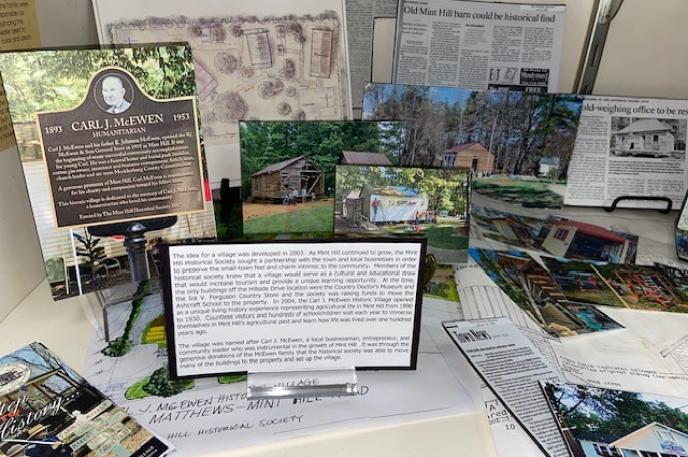
The Mint Hill Historical Society began in 1985 when a “For Sale” sign appeared in front of an old town building. Since then, buildings have been restored and moved, books have been written and countless tour groups have enjoyed the Carl J. McEwen Historic Village, all made possible by this local group.
Image
Image
Image
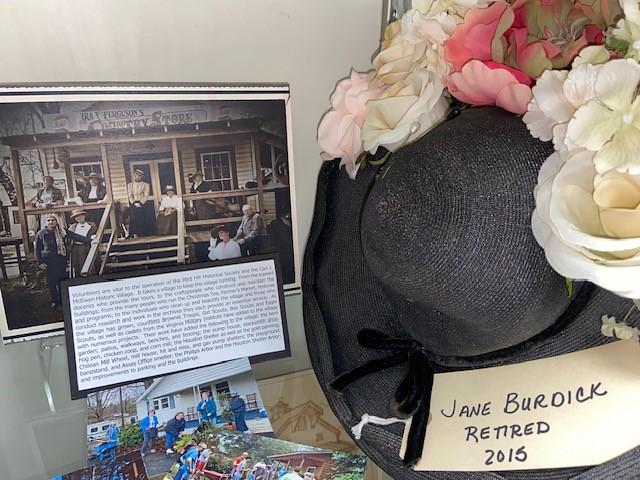
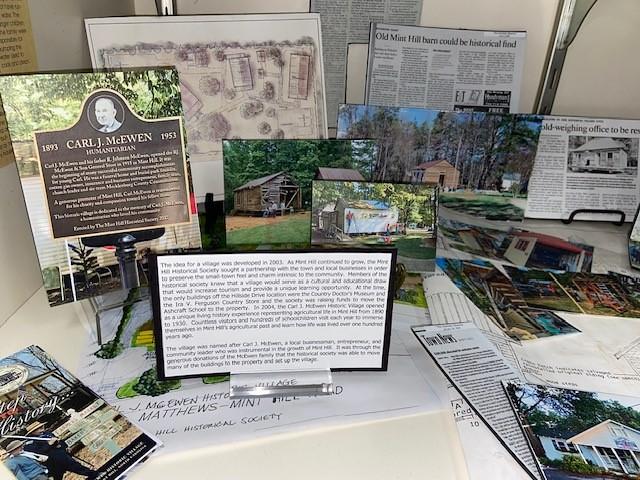
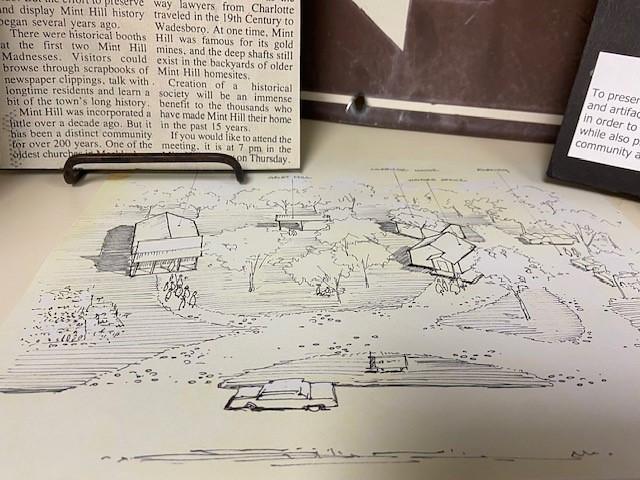
On display from now until December, this exhibit shares the story of a local organization created specifically to preserve the history of a quickly changing landscape. Items in our case range from a model for the proposed historic village in 1986, a vintage hat worn by one of the volunteer docents who took tour groups through the schoolhouse, glass bottles from the historic doctor’s office and much more. Articles from local newspapers share details about the formation of the group and notable events in their history.
Make sure to stop in the Mint Hill Library and celebrate this history with us!
To check out more about the MHHS, https://www.minthillhistory.com/.
A special thank you to Dawn Funk of the MHHS who spent so much time curating this exhibit and sharing it with our library patrons.