
How July 2 almost became Independence Day
July 2, 2019
Yes, you read that right!
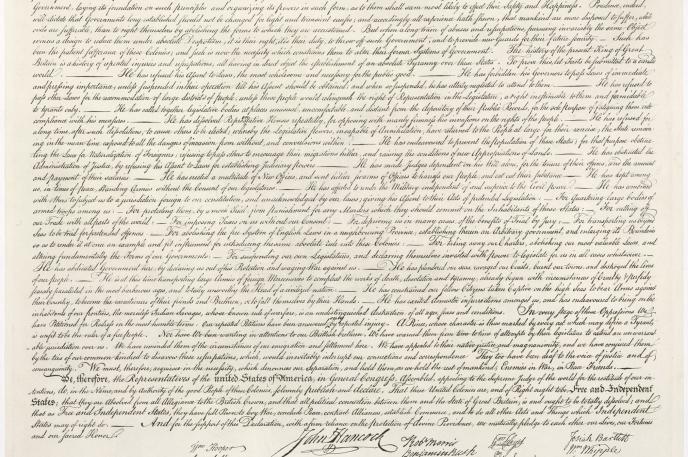
The legal separation of the Thirteen Colonies from Great Britain in 1776 actually occurred on July 2, when the Second Continental Congress voted to approve a resolution of independence proposed by Richard Henry Lee of Virginia. Lee made three main points, to include a declaration of independence, a call to form foreign alliances and a “plan for confederation”:
Lee’s Resolution, June 7, 1776 (National Archives and Records Administration: 301685 )
After approving Lee’s Resolution, Congress turned its attention to The Committee of Five’s drafted statement of independence. The Committee met and wrote what became the Declaration of Independence between June 11-28. Thomas Jefferson, John Adams, Roger Sherman, Robert Livingston, and Benjamin Franklin all served on the Committee, with Thomas Jefferson leading as the principle author. On July 2 the document was approved, and by July 4, 1776 Congress agreed on the final wording, thus leading to the official adoption of the Declaration of Independence.
The Committee of Five (National Archives and Records Administration: 532924 )
So, should we celebrate July 2 as our actual day of independence? It seems that John Adams thought so. He wrote to his wife Abigail:
“The second day of July 1776 will be the most memorable epoch in the history of America. I am apt to believe that it will be celebrated by succeeding generations as the great anniversary festival. It ought to be commemorated as the day of deliverance, by solemn acts of devotion to God Almighty. It ought to be solemnized with pomp and parade, with shows, games, sports, guns, bells, bonfires, and illuminations, from one end of this continent to the other, from this time forward forever more.”
Portrait of John Adams (National Archives and Records Administration: 50780435)
Adams's prediction of how Americans would celebrate this occasion was accurate, despite being off by two days. From the outset, Americans celebrated independence on July 4, the date shown on the much-publicized Declaration of Independence, rather than on July 2, the date the resolution of independence was approved in a closed session of Congress.
The signers of the Declaration of Independence were not all present on July 4, 1776, although Thomas Jefferson, John Adams, and Benjamin Franklin did write that they signed it the same day the document was approved and adopted. Other members of Congress, led by John Hancock, the President of the Congress, signed the Declaration nearly a month later on August 2.
The King of England viewed the members of the Second Continental Congress as traitors, rebelling against the crown. None of the signers were sentenced to death in response to their rebellious actions, but most were punished indirectly through the burning of their homes, imprisonment, or physical harm.
Oddly, both John Adams and Thomas Jefferson, the only signers of the Declaration of Independence later to serve as Presidents of the United States, died on the same day: July 4, 1826, which was the 50th anniversary of the Declaration.
----
Sources:
Massachusetts Historical Society. Letter from John Adams to Abigail Adams, 3 July 1776. Accessed July 2019. https://www.masshist.org/digitaladams/archive/popup?id=L17760703jasecond&page=L17760703jasecond_2
National Archives and Records Administration. Declaration of Independence. Docs Teach. Accessed July 2019. https://www.docsteach.org/documents/document/the-declaration-of-independence
National Archives and Records Administration. Lee’s Resolution. Docs Teach. Accessed July 2019. https://www.docsteach.org/documents/document/lee-resolution-independence
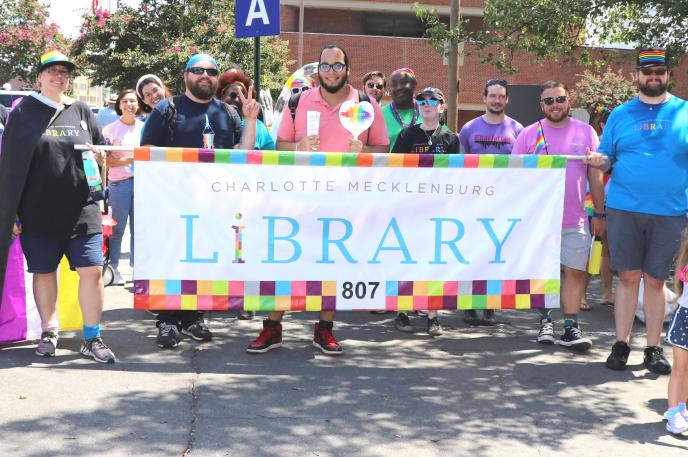
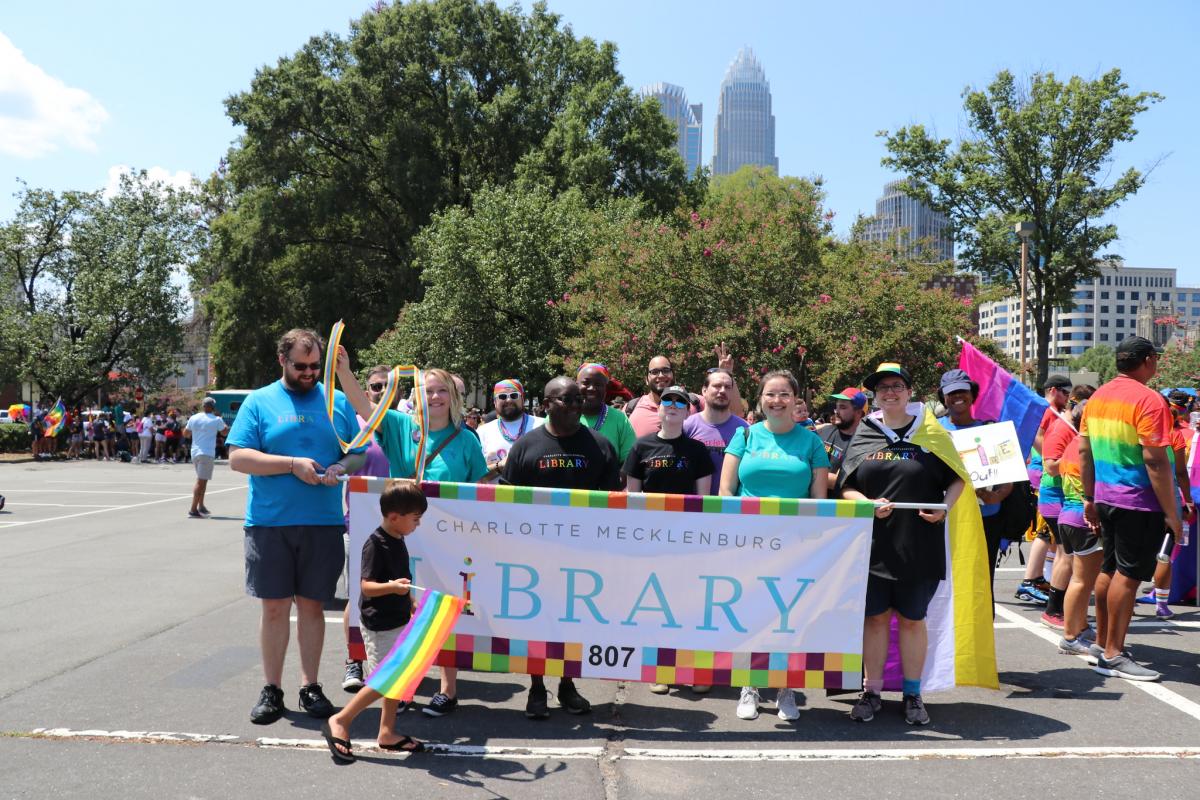
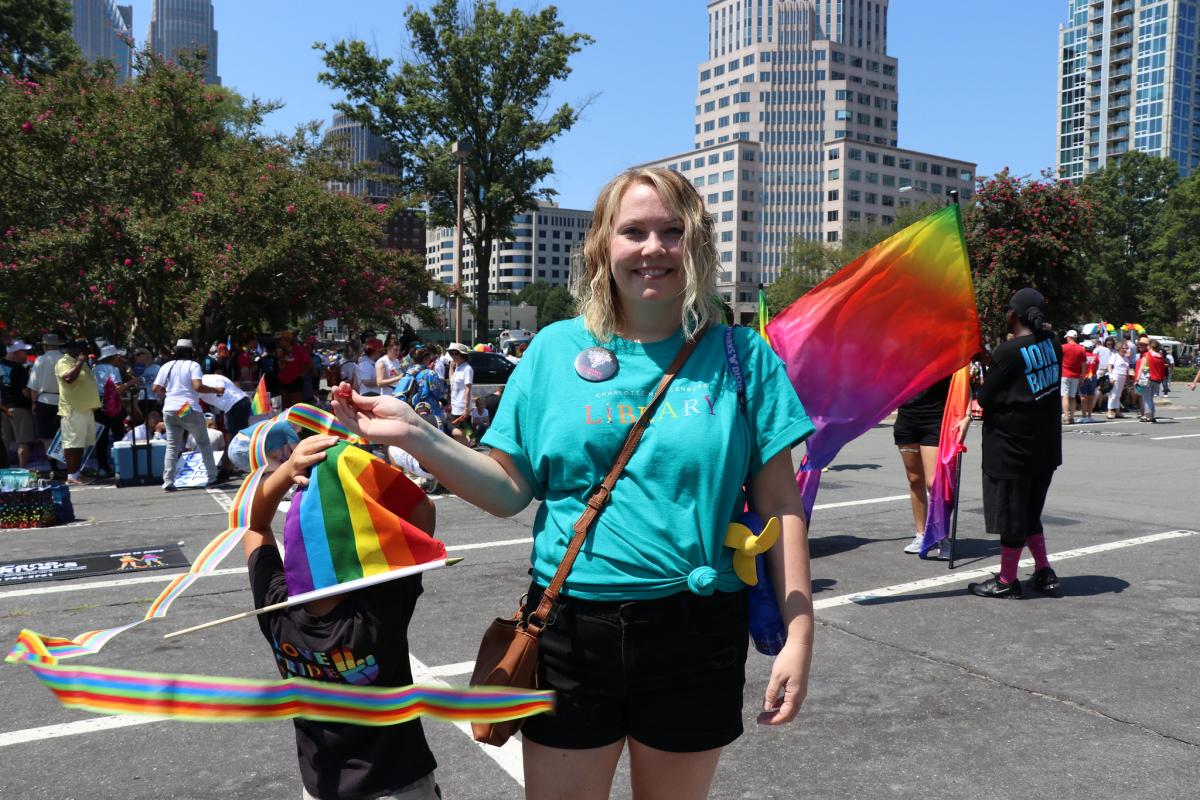 diversity and inclusion. As part of that mission, the Library started participating in the Pride Parade in 2018 by being one of the many groups to walk in the parade. Our group photo of that day gained the most likes on Instagram of all the library posts up to that point. During the parade, it was clear by the amount of people excitedly shouting, “It’s the library!” that our participation was important to our community.
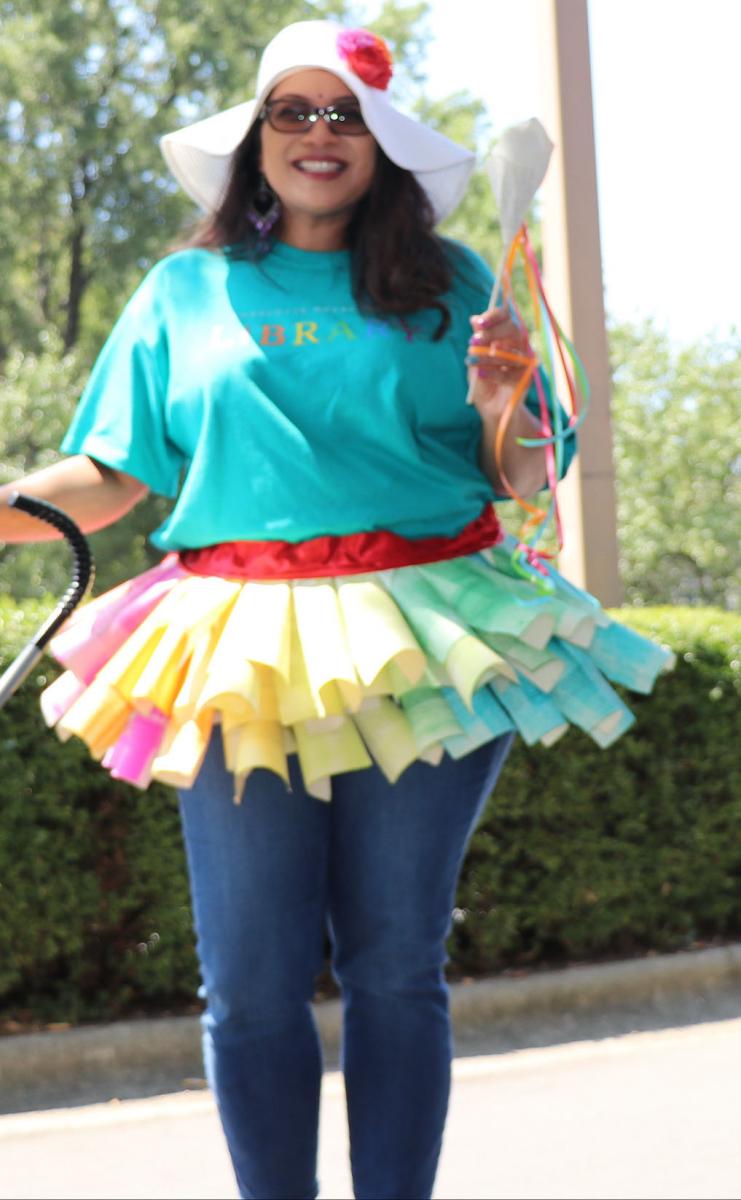 This year, 25 staff members and their families from different library locations participated in the parade and represented the system by walking. One of the participants said, “I’m so glad I was able to participate. Seeing how supportive and appreciative the community was makes me glad the Library is involved. I can’t wait to participate next year!” Those who were not able to attend the parade aided in various way leading up to the event. Thank you to all who supported our efforts to bring Library resources to the Charlotte community and helping us build a stronger community!
  significant gay, lesbian, bisexual, transgender or queer/questioning content, aimed at children and youth from birth to age 18.
 demand mystery books. For instance, the psychological thriller
  What other options do mystery lovers have for the remainder of the season? We suggest revisiting some of selections released earlier this year that might have been overlooked. Here’s a
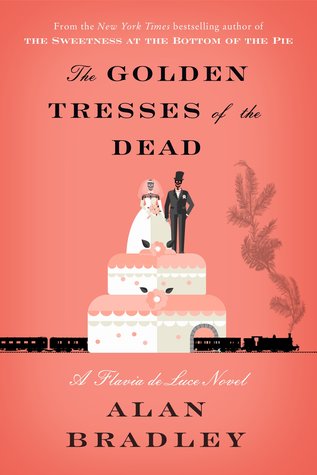 Lieutenant Eve Dallas to the witty English mystery

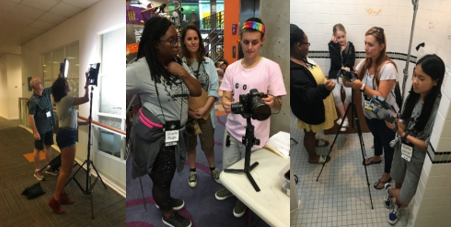 The scripts for the films were chosen by camp leadership such as GRC Executive Director, Kelly Finley, and a Women’s and Gender Studies professor at UNCC. Finley met with Charlotte Mecklenburg Library's Chief Innovation Officer, Seth Ervin, to discuss the camps innovative approach to creating job opportunities for young people and making a positive change in the film industry. Ervin has also brought other film making opportunities to the library for teens and adults, including a partnership with the
 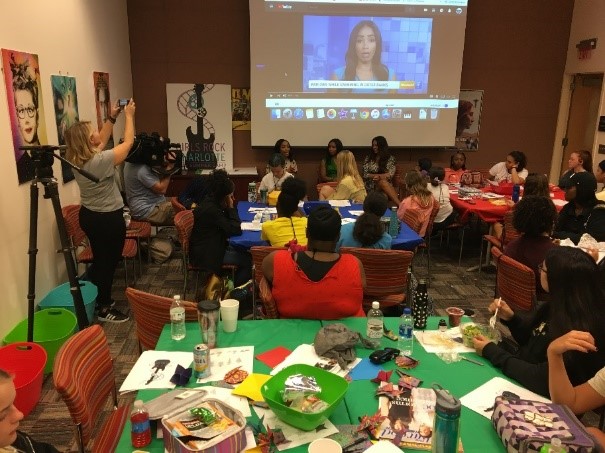 During the week of July 28 – August 3, girls and female filmmaker volunteers gathered in meeting spaces at Main Library and ImaginOn to learn the roles of director, camera, editor, art director, lighting, sound and more. Staffing the camp with all women filmmakers was especially difficult. Jolly Dale, a producer for "The Walking Dead" and the GRC Film Camp Director said, “Finding female film professionals is difficult in general because there just aren’t that many of them. Finding female film professionals to also give up their time and employment for a day or more to volunteer with GRC Film Camp is even more challenging - because those few are in high demand in the industry. With Film Camp, we’re trying to grow the percentage of women working in media, and in the process, effect change in how women and women’s issues are represented on screen.”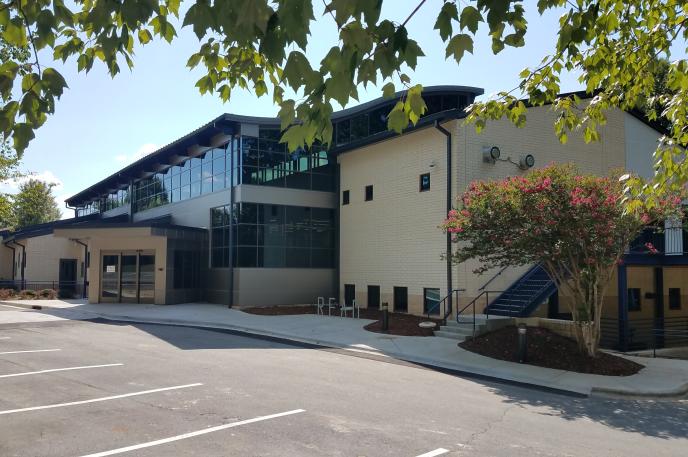
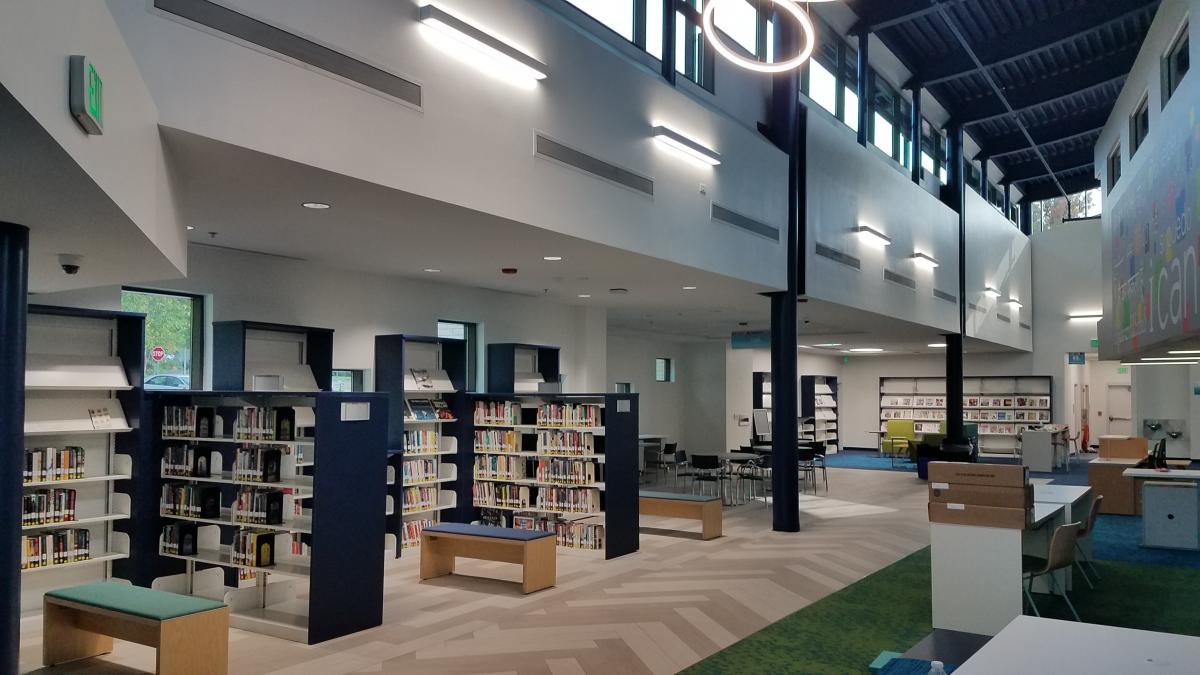 North County Regional Library (located at 16550 Holly Crest Lane, Huntersville, 28078) increased by 1,860 square feet to nearly 24,860 square feet and now includes redesigned spaces for children and teens, including a new Teen Loft, a makerspace room, an expanded community room, individual and group study rooms and collaborative spaces, a vending café, and a patio and terrace. Features include free Wi-Fi, audio-visual capabilities and a public computer lab. A new exterior book/materials drop is part of the new traffic flow in the parking lot. The North County Regional Library is also updated with an efficient checkout system using radio frequency identification (RFID) and an automated materials handling (AMH) unit.
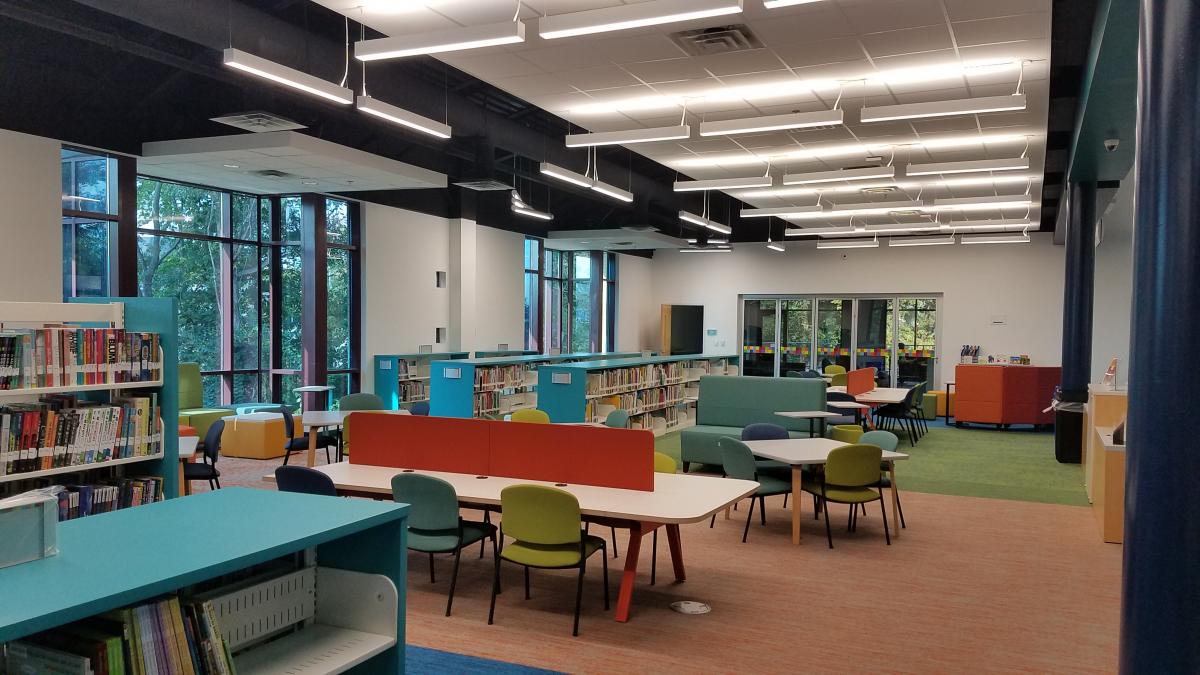 Starting October 7, North County Regional Library will resume normal operating hours. The Library will be open Mondays through Thursdays 9 a.m. - 8 p.m.; Fridays and Saturdays 9 a.m. - 5 p.m.; and Sundays 1 p.m. - 5 p.m. Hours may vary in summer.
 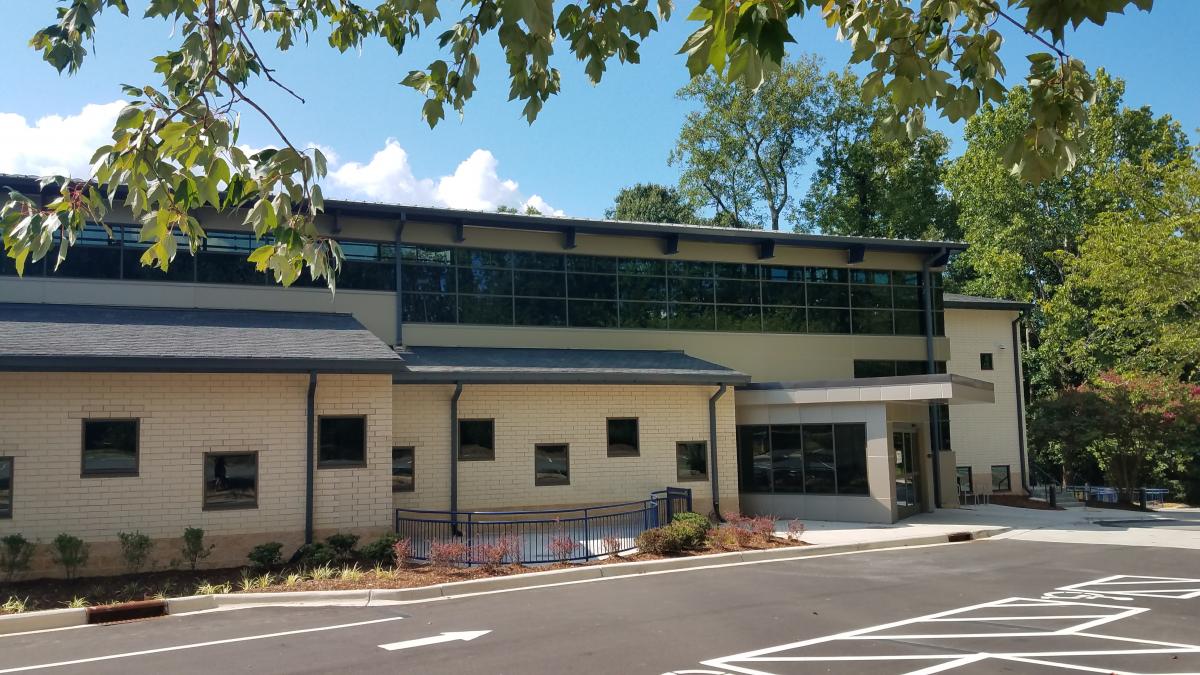 One of North County Regional's newest features is an exterior drive-through book/materials drop with a new traffic flow in the parking lot to accommodate this improvement. (Book/materials drop open October 7.) Please watch for and follow the directional signs.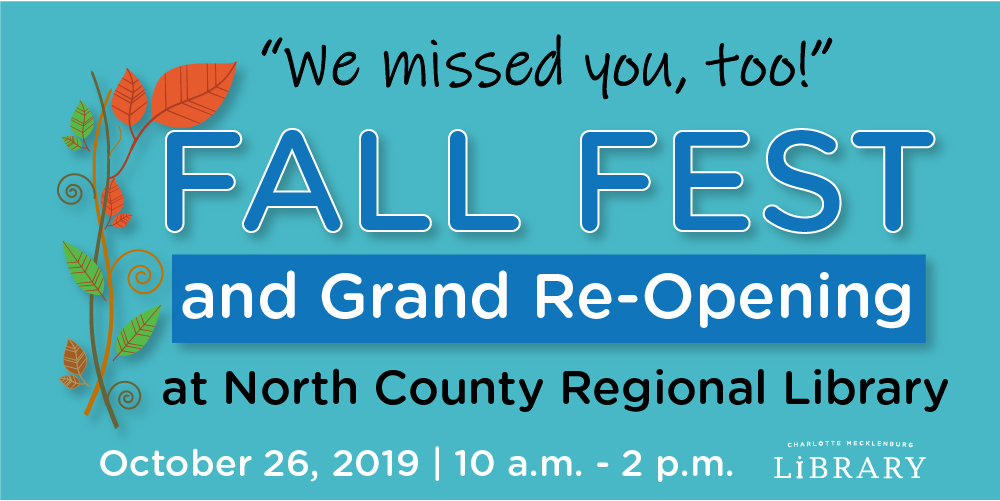
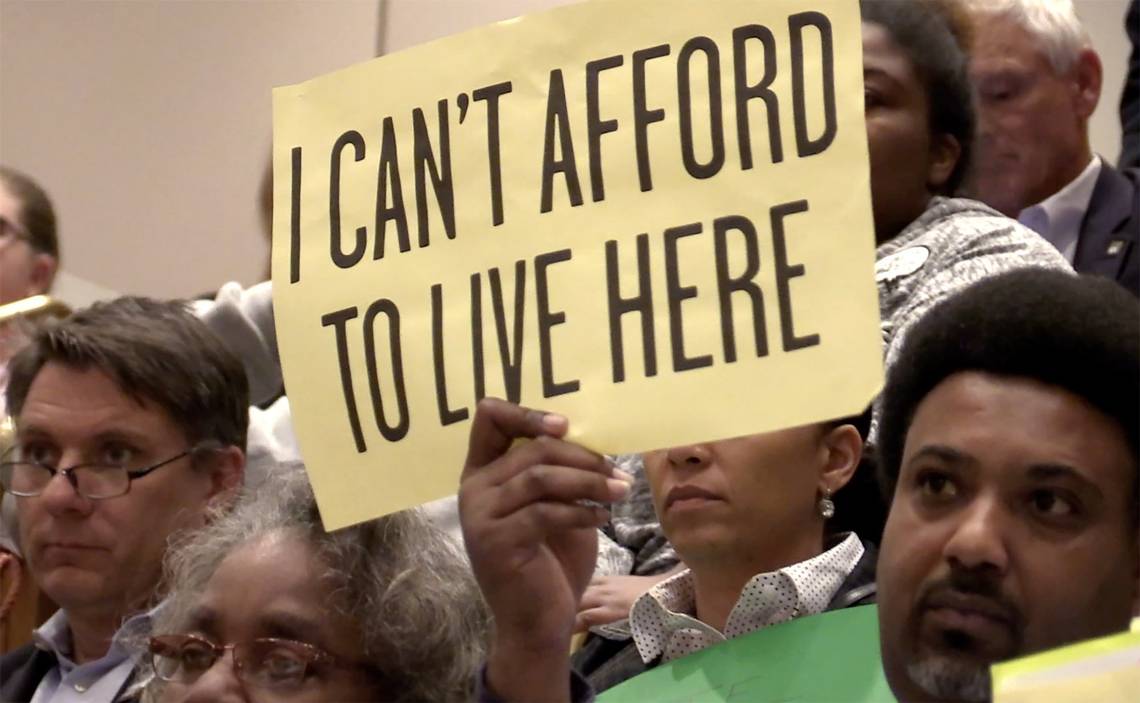 The CJC is also planning to host a community conversation about affordable housing on October 13, 2019 at ImaginOn: The Joe and Joan Martin Center to highlight local people who are making a difference in the affordable housing conversation, along with groundbreaking solutions. If you know someone who is making a difference in this area, please consider